Welcome to the United Nations

 OHCHR


Children’s rights: what they are and how we help
OHCHR and children
Who are we and what do we do?
We are the UN Human Rights Office and we are part of the United Nations (UN) – an international organisation created in 1945. It is made up of almost all countries in the world. The UN has many departments and offices, including the UN Human Rights Office (OHCHR).
Our job is to help make sure that everyone’s human rights - including those of children - are protected and promoted everywhere in the world.
What are children’s rights?
Children’s rights are promises that governments have made to children and young people under 18 years old to help them grow up happy, safe, and healthy, and enjoy a good life in all places where they live.
The Convention on the Rights of the Child is the main international document that tells us about children’s rights. It explains who children are, all their rights, and the responsibilities of governments. All the rights are connected, they are all equally important, and they cannot be taken away from children.
Some examples of children’s rights include:
- The right to go to school
- The right to be healthy
- The right to be treated fairly and equally
- The right to be safe and protected from harm
- The right to speak up and be heard
- The right to play and rest
Find out more about your rights and the Convention on the Rights of the Child
Find out more about the Committee on the Rights of the Child
What work do we do on children’s rights and how do we do it?
- We make sure children’s rights are included: We work to make sure that children’s needs, experiences, voices and recommendations for change are included in all decisions, laws, and plans that have an impact on their lives. It’s about helping every part of society – governments, organizations, and businesses - think about and respect children’s rights all the time.
- We write reports on children’s rights: These help world leaders and other decision-makers to understand what children need and how to protect their rights. The reports can talk about many different topics like education, children in war, the environment, children’s rights online, and justice.
- We organize meetings about children’s rights: Every year we hold meetings — including at the UN Human Rights Council – where governments talk about and take action on human rights – and elsewhere. We make sure different experts, including children, speak in these meetings. To prepare, we collect ideas from experts, governments, organizations, and children themselves. These ideas help shape the meeting and guide actions to improve children’s lives.
- We support laws and policies: We help countries make and use rules that keep all children in their countries happy, safe and healthy.
- We work with others: We team up with experts, governments, organizations that work with children, and schools and universities to make sure children’s rights are respected.
- We share knowledge, training, and advice: We help countries, communities, and children themselves learn about children’s rights by offering training and advice. This means teaching people — like government workers, teachers, judges, and others — how to make good laws, use fair systems, and listen to children’s voices.
How do we work with and for children?
We listen to children and work with them to make sure their voices are heard in meaningful ways on topics that matter to them and their rights. Here’s how we do this:
- We consult children: When we work on a topic — like making sure every child can go to school — we ask children to share their thoughts and experiences. We hold consultations, share surveys, and ask children to share their thoughts in writing, drawings, or videos. We also create guides to help children, adults, organizations working with children, and other partners to hold consultations with children. What children tell us helps us understand what children need and how to make things better for them.
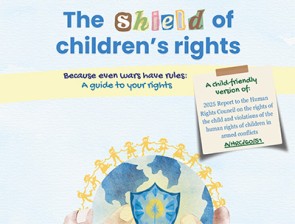
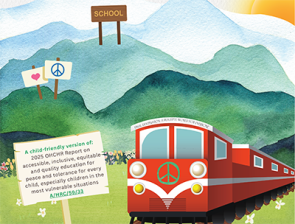
- We create child-friendly materials: We make versions of our documents that are designed for children to understand about our work and research on children’s rights. These explain the challenges children face and what is being done to protect their rights around the world.
- We include children in meetings: We invite children to take part in meetings and events, so they can share their views directly with decision-makers.
How can children get involved?
We encourage children to:
- Join discussions
- Share their ideas
- Take part in surveys and requests for information
- Be part of events and meetings
- Keep an eye on our webpage for more opportunities
- Check out Child and Young People’s Standards for their meaningful participation in global events and read the summary (launched April 2026)