 Welcome to the United Nations

 OHCHR


Members
Working Group of Experts on People of African Descent
Current members
Isabelle Mamadou (Spain), Chairperson

Ms. Isabelle Mamadou is an expert in forced migration who served for more than fifteen years as Regional Coordinator for the Spanish organization Movimiento por la Paz (Movement for Peace). Additionally, she was the first Spanish representative selected to participate in the United Nations Fellowship Programme for People of African Descent. Her experience in the fight against Anti-Black racism includes several publications on the discrimination faced by African and Afro-Descendant people, the design of dozens of campaigns for racial justice and the drafting of anti-racism plans and policies. Thanks to her efforts, the Regional Parliament of Valencia, Spain, approved the first non-binding law in Europe on the rights of women of African descent. Ms. Mamadou has also supported civil society organizations working on human rights in Colombia and Brazil, where she documented the barriers faced by Afro-descendant women in their access to political participation. Since 2022, she is resident columnist for the magazine Mundo Negro, a periodical publication about Africa in Spain. She holds a bachelor’s degree in social work from the University of Valencia and a postgraduate degree in humanitarian aid from the Seneca Institute. She also obtained a master's degree in international relations from La Rioja International University.
John Phillip Binondo (Philippines)

Mr. Binondo is a human rights practitioner and educator with over a decade of experience working at the intersection of human rights, education and inclusive governance. Born in Ankara, Türkiye, to a Filipino mother and a Ugandan father, he brings to the mandate his lived experience as a person of African descent from the Asia-Pacific region. Prior to his appointment, he served as Senior Fellow with the Office of the United Nations High Commissioner for Human Rights in the Philippines. An alumnus of the UN Fellowship Programme for People of African Descent, Mr. Binondo has developed strong familiarity with the UN human rights system, including the Special Procedures, Treaty Bodies and the Universal Periodic Review. He has contributed to capacity-building initiatives and multistakeholder dialogue across the Asia-Pacific region, focusing on promoting equality, combating discrimination and strengthening engagement with international human rights mechanisms. Mr. Binondo holds a Master of Arts in China Studies from Zhejiang University and a Bachelor of Arts in International Studies from De La Salle University-Manila. He has taught international studies and human rights at the university level and has served as a speaker, moderator and facilitator in local, regional and global forums on racial equality, minority rights and intercultural dialogue.
Barbara G Reynolds (Guyana)
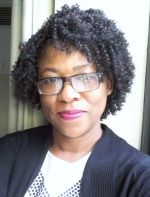
Ms. Reynolds is the Vice-President for Administration, Advancement and Planning at the University of the Southern Caribbean in Trinidad and Tobago. She served as Deputy Vice-Chancellor at the University of Guyana from August 2014 to September 2019. Prior to this, Ms Reynolds was Head of Education for Save the Children UK, after having spent the previous two decades with UNICEF in programme, management and representational roles at Headquarters and country offices. Ms. Reynolds began her professional career as a teacher and continues to be involved in education. She Co-Chairs the CARICOM Digital Skills Task Force and is a Member of the Independent Technical Advisor Panel for the Global Partnership for Education. She is an active human rights professional, and an experienced human rights and gender mainstreaming facilitator. She holds a BA Education (Caribbean Union College), MA in Curriculum and Teaching (Howard University), the Post-Graduate Diploma in Distance Education (University of London) EdD in International Education Development/Curriculum and Instruction (Columbia University) and the MSt in International Human Rights Law (University of Oxford). Ms Reynolds’ second working language is Portuguese.
Catherine S. Namakula (Uganda)
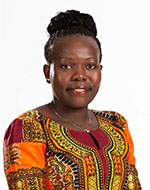
Ms. Namakula is a senior lecturer with the University of the Free State, Bloemfontein, South Africa and Professor in Human Rights and Criminal Justice with the Global Humanistic University, Curacao. She is a published scholar in public law and has served in various positions with expert bodies and organisations. She has made notable scholarly contributions relating to the inclusivity of people in criminal justice processes, promoting the parity of esteem of African languages and ensuring effective interpretative performance. She is also a legal advisor and community leader among immigrant entities and associations in South Africa. She holds a Doctor of Philosophy from the University of the Witwatersrand, Johannesburg, South Africa, and a Master's degree in Human Rights Law from the University of Nottingham, United Kingdom, among other qualifications.
Miriam Ekiudoko (Hungary)
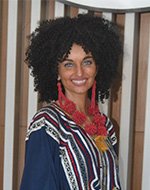
Ms. Ekiudoko is a human and civil rights activist and advocate. She is unapologetically passionate in the struggle for justice, dignity, rights and peace. Her varied background includes serving as a healer, storyteller, and international motivational and public speaker. She has taken on a variety of roles and tasks as a consultant, trainer, facilitator and artist. Her professional background covers the areas of racial justice and non-discrimination, working towards dismantling harmful and detrimental power structures, systems, and practices and replacing them with just ones. This entails developing and analyzing policies, strategies, recommendations, and educational materials; coordinating and evaluating projects; capacity building; and delivering workshops, lectures, and speeches. In the past two and a half decades she has founded and led a number of civil society organizations, movements, campaigns and cultural events, and has served as a board member and advisory counsellor at various African diaspora organizations and expert bodies. She has given lectures and facilitated workshops at several institutions, including governmental and international organizations, law enforcement academies, educational institutions, non-governmental organizations, and participated in panel discussions on human rights, discrimination, racial profiling, hate crimes; intersectionality, diversity, inclusion and belonging; the history and legacies of colonialism, imperialism, the enslavement, trafficking and illegal trading of Africans; racialization, and racial formation; reparations, racial justice, racial healing; agency and activism; sustainability, organizational development, community building, and self-empowerment.
View the list of all Special Procedure mandate-holders for a table of next appointments.