 Welcome to the United Nations

 OHCHR



Human rights don’t protect themselves.
Your donation protects the essentials we all rely on.
20 January 2026
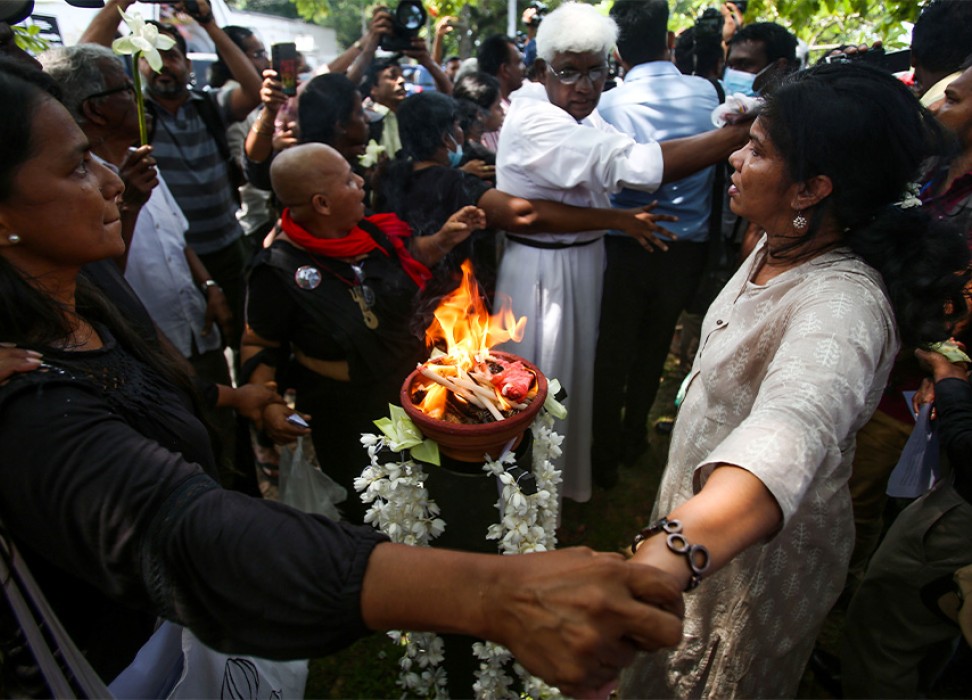
“We lost everything — even hope for justice,” said one of the survivors interviewed in a new UN Human Rights brief on accountability for conflict-related sexual violence in Sri Lanka.
The survivor reflected on the overwhelming despair felt by many who were subjected to sexual violence during Sri Lanka's civil war, which ended in 2009.
The UN Human Rights brief described conflict related sexual violence in the East Asian nation as a systemic issue. Drawing from testimonies of survivors and their representatives, the brief indicated that the incidents were not isolated but targeted.
The findings of this brief were based on months of consultations with survivors in Sri Lanka, conducted remotely due to access restrictions in the country for members of the Office’s Sri Lanka Accountability Project.
Despite the war’s official end, the legacy of sexual violence endures, with many survivors still waiting for justice.
Another survivor expressed despair for justice, said: “Nothing will happen, so why should we take any risk?” One survivor summed up the collective feeling of many: “We have learned to live with the knowledge that we will never receive justice.”
The international community has documented widespread and systemic sexual violence in Sri Lanka. Yet the cycle of impunity remains unbroken.
The paper documents how sexual violence was systematically used to dominate and intimidate individuals and communities, creating a pervasive climate of fear and humiliation. From men whose genitals were mutilated, to women subjected to systemic rape, a male survivor explained how societal stigma pushes him to stay quiet: "Every time I see them, I feel ashamed that they know," referring to his abusers, who still live in his community. The shame is compounded by a deep fear of retaliation. "If anyone protests sexual violence, they will have to pay with a thousand times more abuse themselves."
Many survivors also endured other serious human rights violations, including enforced disappearance, arbitrary detention, forced displacement and the recruitment of child soldiers.
A survivor shared that the best choice many survivors face is simply to “avoid the ordeal of the justice system altogether.” But silence comes at a cost. “We live with the trauma every day, but we can’t speak of it.”
The loss of dignity is central to the trauma faced by survivors. One female survivor said, "They took my dignity. They cannot give it back to me." Survivors are left to live with this stolen dignity, as their pain is often met with public denial or indifference. This stigma often extends to entire communities, leading to lifelong discrimination and exclusion. “When the truth emerged, the child was branded a ‘child of the army.’”
Despite the impunity, the cry for justice grows louder: “What we need the most is recognition...acknowledgment that something happened to us...that we did nothing wrong. This will be the first step toward healing,” one survivor said.
Under international law, Sri Lanka is required to prosecute perpetrators of conflict-related sexual violence, including those who ordered, aided, or failed to prevent such crimes under command responsibility.
UN High Commissioner for Human Rights, Volker Türk, during the 60th session of the Human Rights Council, called on the Sri Lankan government to ensure accountability.
“Sri Lanka today has an historic opportunity to heal from the cycles of violence and impunity that have dominated for decades,” he said. “The Government has a clear mandate from across the nation for transformative reforms, accountability, truth and justice.”
Your donation protects the essentials we all rely on.