 Welcome to the United Nations

 OHCHR




Human rights don’t protect themselves.
Your donation protects the essentials we all rely on.
11 August 2026
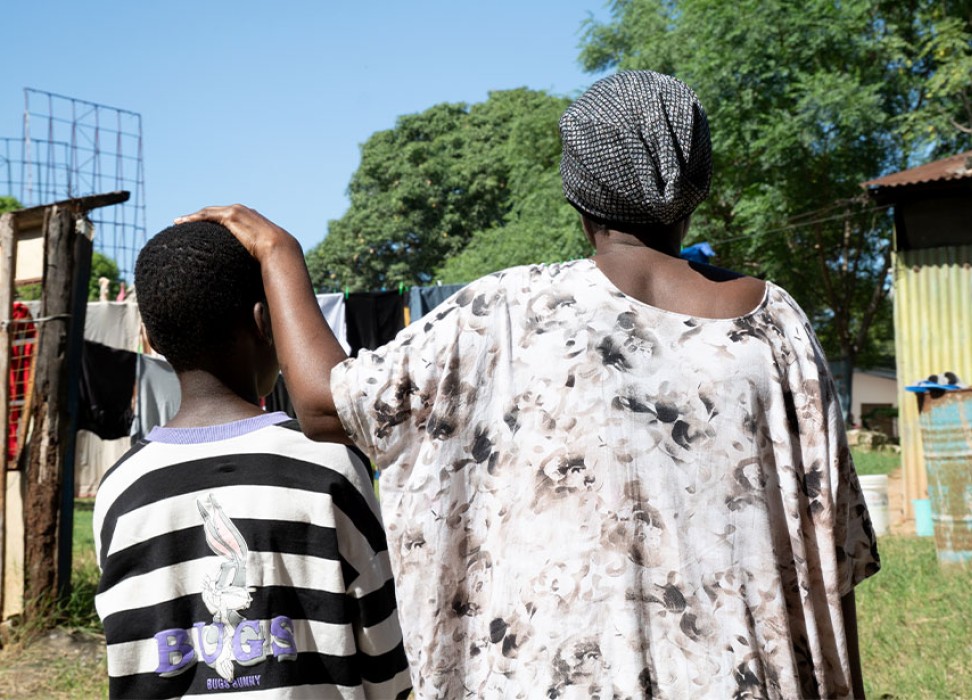
When Mary*, an eight-year-old girl in Kenya, answered the door to a man asking for her grandmother, she could not have known it would lead to one of the most traumatic experiences of her life.
“My grandmother’s client asked after her, I said she was not in and that she had taken my aunty to school, he then asked why I myself was not in school and I explained it was because of lack of money, and no uniform,” she said.
Mary said the man lured her to his house after offering to buy her the school uniform she needed to attend school. Instead, he assaulted her.
Her brother, who tried to rescue her, was slapped and ordered to keep quiet.
Mary's grandmother reported the assault, but her search for justice was marked by confusion. After waiting for a court hearing, she discovered the case had been moved to another courtroom without her knowledge.
According to UN Women, nearly one in three women worldwide experience physical or sexual violence during their lifetime. Kenya is no exception, and cases like Mary's illustrate why prevention alone is not enough. Survivors also need a justice system that responds quickly, consistently and transparently.
To strengthen that response, the UN Human Rights Office in Kenya, alongside UN Women and with funding from the Italian Agency for Development Cooperation, has been implementing a project titled, Let It Not Happen Again: Safeguarding the Rights of Women Through Strengthening Access to Justice for Gender-based violence Survivors in Kenya
The initiative brings together, justice sector institutions, independent commissions including the national human rights institution in Kenya, human rights defenders, civil society and communities at large to enhance collaborative efforts on GBV prevention and response.
“While coordination among these actors has improved over time, stronger collaboration is still needed to ensure survivors can access comprehensive and effective support without facing barriers,” said Nelly Warega, a Human Rights Officer at the UN Human Rights Kenya Country Office.
“Survivors often describe being referred from one office to another after reporting to the police, only to find that their cases have made little progress months or even years later,”
“Warega said. “Although coordination mechanisms are in place, stronger engagement among all actors is needed to jointly identify service gaps and ensure more effective support for survivors.”
Charles Kwemoi, Country Representative of UN Human Rights Kenya Country Office, said the most important thing is to put the victim at the centre.
“That means ensuring protection for victims, but also a robust response from judicial actors — with a strong referral pathway so that survivors remain at the centre of the process,” he said.
A key part of that response has been the strengthening of gender desks which were designed to simplify what has been a fragmented and lengthy process for survivors. Through this programme, UN Human Rights Kenya Country Office partnered with the NPS to strengthen these desks in Nairobi, Kilifi and Kisumu Counties to provide more survivor-friendly environments for reporting and investigation of GBV.’
Chris Nyamawi, Officer Commanding Station at Mtwapa Police Station, explained how the referral pathway works:
“Once a survivor reports a case, a statement is recorded and the survivor is referred to a nearby hospital for treatment and the completion of medical documentation, along with access to counselling. The investigating officer then gathers evidence and witness accounts to build the case before it proceeds to court."
"Police alone cannot ensure that a survivor gets justice," Nyamawi said. "There must be collaboration between police, hospitals, the judiciary, rescue centres and children's departments."
The initiative was originally established to help protect women from violence during election periods. It has since evolved into a broader programme focused on preventing and responding to gender-based violence, with particular emphasis on improving access to justice.
Training for police officers, prosecutors, judicial officers and other justice actors has been central to that effort and, according to those involved, is already beginning to deliver results.
For Mary's grandmother, the improved coordination made a tangible difference. After following up at the police station, she was reassured that the case was being actively handled. When she returned to court, the accused was there — this time in the dock.
The case did not disappear, as the survivor had feared. The various arms of the law were aligned.
Mary’s grandmother recounted her family’s experience
The programme works on two fronts. At the institutional level, it supports legal and policy reform, strengthens government systems and builds the capacity of justice institutions to prevent and respond to gender-based violence. At the community level, it works to change the social norms that perpetuate violence while empowering women and girls to understand and claim their rights.
Alongside helping survivors access essential services, the programme supports economic empowerment initiatives for women and girls at risk, expands access to services and strengthens legal empowerment to help break cycles of violence.
Its work is anchored in two outcomes. The first strengthens national and county government systems to prevent and respond to gender-based violence by improving gender-responsive laws, policies and strategies, while enhancing accountability and transparency.
The second focuses on ensuring women and girls can access timely, quality and gender-responsive services. It also raises awareness of their rights and strengthens the capacity of state and non-state actors to improve coordination across the justice system.
Access to justice is a cornerstone of human rights protection. Yet for survivors of gender-based violence, that access is too often undermined by delays, poor coordination and a lack of information about where their cases stand.
Initiatives such as Kenya's gender desks demonstrate that when justice institutions work together rather than in isolation, survivors are more likely to remain engaged in the justice process and perpetrators are more likely to be held accountable.
UN Human Rights continues to support Kenya's justice and security institutions, alongside civil society and human rights defenders, to strengthen these pathways so that fewer survivors are left to navigate the justice system alone.
*Names have been changed to protect the identities of survivors.
Watch how coordinated action is helping survivors like Mary find justice
Your donation protects the essentials we all rely on.