 Welcome to the United Nations

 OHCHR


20th anniversary of the CRPD
Committee on the Rights of Persons with Disabilities

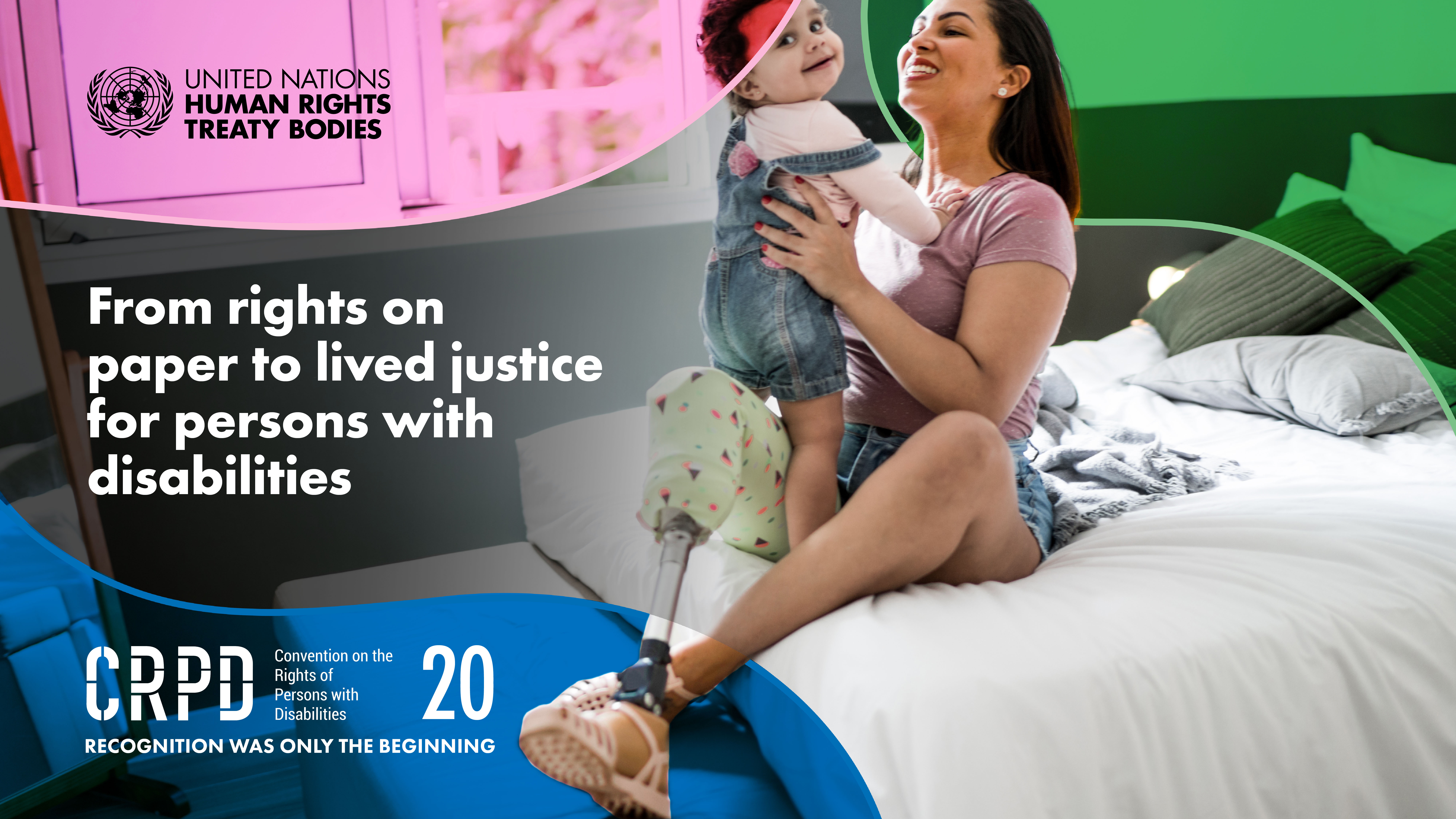
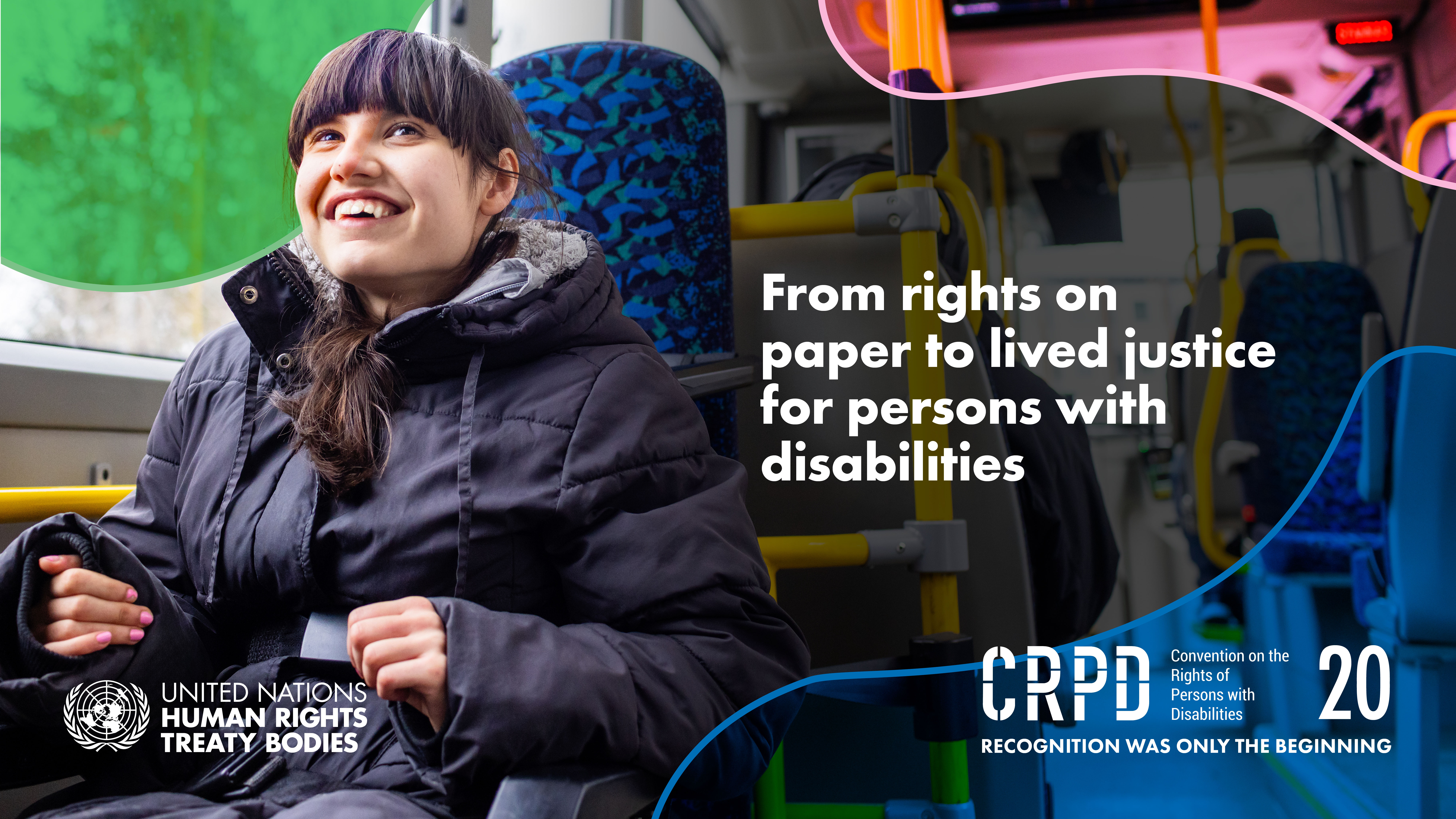
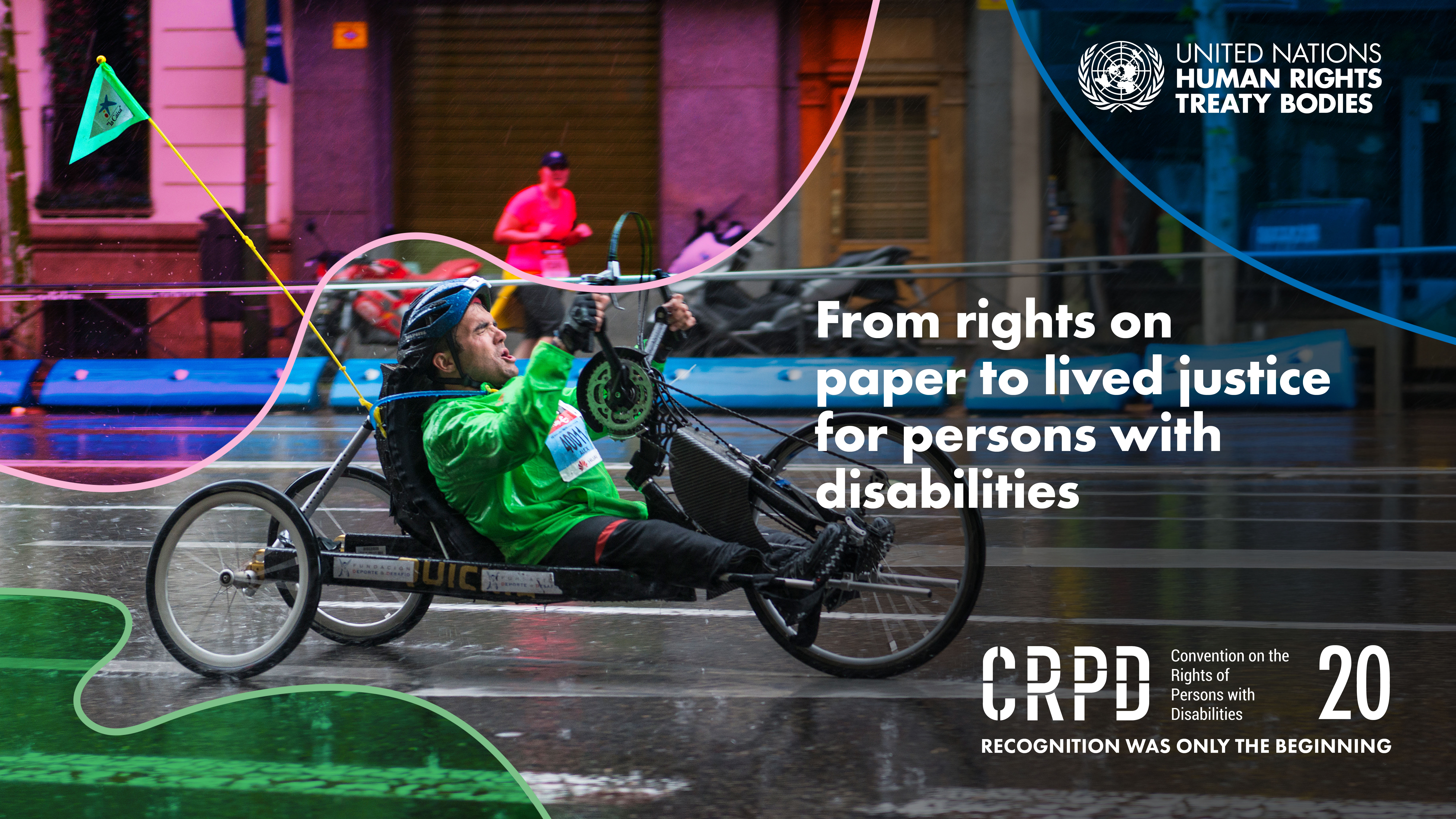
“Recognition was only the beginning : From rights on paper to lived justice for persons with disabilities”
The year 2026 marks the 20th anniversary of the adoption of the United Nations Convention on the Rights of Persons with Disabilities. Over the past two decades, the Convention has fundamentally reshaped the global understanding of disability, establishing a human rights-based framework grounded in dignity, autonomy, equality, and inclusion. The central challenge has shifted from norm-setting to implementation. The milestones achieved since its adoption include widespread ratification, the development of national legal frameworks, and increased global recognition of the rights of persons with disabilities.
At the same time, the lived realities of many persons with disabilities continue to reflect persistent inequalities, systemic barriers, and exclusion. Despite normative progress, the gap between legal commitments and effective implementation remains one of the most pressing challenges. Persistent issues such as poverty, unemployment, lack of accessibility, and continued segregation in education and community life highlight the need for renewed focus on practical realisation of rights.
The global context is also rapidly evolving. Emerging technologies, climate change, economic inequalities, and shifting geopolitical dynamics are reshaping the human rights landscape, creating both new opportunities and risks for persons with disabilities.
As reflected in the anniversary slogan, while the adoption of the Convention constitutes a critical milestone in making the rights of persons with disabilities a reality, it was only the start. Much work lies ahead. The anniversary provides a critical opportunity not only to celebrate and consolidate achievements, but also to undertake a forward-looking reflection and define the next phase of implementation in a changing world.
All States, international, regional and national institutions, civil society organisations and other interested partners are invited to organize activities to mark the anniversary and to use it to advance the rights of persons with disabilities. The anniversary slogan and logo may be used freely for anniversary related activities that promote the Convention and the work of the Committee.
“Recognition was only the beginning”,
In this regard, the anniversary should not be approached as a purely commemorative exercise, but as a moment for critical reflection, consolidation of achievements, and strategic repositioning.
The anniversary therefore serves three interconnected purposes:
- Celebration: recognising the transformative impact of the CRPD
- Consolidation: strengthening and safeguarding existing achievements
- Transformation: advancing a renewed agenda for effective implementation
Committee discussions have underscored a strong consensus that the priority must now be placed on measurable impact and accountability, addressing the persistent gap between commitments and lived realities.
The Committee also recognises its institutional context and limitations, particularly in relation to the Conference of States Parties to the CRPD, where its role is primarily participatory and dependent on partnerships and invitations. This underscores the importance of a strategic, collaborative, and outward-looking approach.
The anniversary therefore provides an opportunity to strengthen collaboration with States Parties, United Nations entities, organisations of persons with disabilities (OPDs), and other stakeholders, while reinforcing the role of the Committee as a key actor in promoting accountability and advancing disability rights globally.
Objectives
The CRPD@20 initiative aims to:
- Take stock of achievements and progress over the past 20 years
- Consolidate key normative and policy gains of the Convention
- Identify persistent gaps and structural barriers to implementation
- Promote accountability and measurable progress at national, regional, and global levels
- Define strategic priorities for the next phase of CRPD implementation
- Strengthening the visibility and influence of the CRPD Committee
- Enhance coordination within the Committee and engagement with external partners
Key Thematic Areas
The CRPD@20 initiative will focus on the following interrelated thematic areas:
- From Recognition to Realization: Implementation and Accountability
Closing the gap between legal frameworks and lived realities, and strengthening monitoring, follow-up, and accountability mechanisms. - Equality and Inclusion in Practice
Addressing persistent inequalities in education, employment, and participation, and promoting inclusive systems and policies. - Protection from Violence and Multiple Discrimination
Addressing disability-based violence and intersecting forms of discrimination, particularly affecting women and other marginalized groups. - Independent Living and Community Inclusion
Advancing deinstitutionalisation and the right to live independently and be included in the community. - Accessibility, Legal Reform and Capacity-building
Addressing stagnation in accessibility, supporting legal reform, and strengthening capacity for effective implementation. - Disability Rights in a Changing Global Context
Responding to emerging global challenges, including technological transformation, climate change, and evolving governance frameworks.
Approach and Strategic Direction
CRPD@20 will adopt a comprehensive, coordinated, and forward-looking approach, informed by Committee discussions and institutional realities.
- Reflection and Consolidation
Assessing the impact of the CRPD over the past 20 years
Identifying lessons learned and good practices
Ensuring that achievements are safeguarded and built upon - Coordination and Strategic Messaging
Strengthening internal coordination within the Committee
Developing a clear and coherent message to guide engagement
Exploring the reactivation of a dedicated working group on CRPD@20
Ensuring alignment of priorities across Committee members - Engagement through Partnerships
Engaging with States Parties, OPDs, UN entities, and regional organizations
Participating in 19th COSP and other global platforms through collaboration
Exploring opportunities beyond formal UN frameworks to enhance impact - Year-long Strategic Platform
Approaching the anniversary as a sustained, year-long initiative
Leveraging multiple international events and forums
Ensuring continuous visibility and influence throughout the anniversary year
Key Activities
High-level symposium during a CRPD Committee session in Geneva
Engagement in COSP and other international platforms
Thematic events in collaboration with States and partners
Development of policy guidance and strategic outputs
Outreach to regional and global stakeholders
Participation in cross-cutting global discussions (AI, climate, development)
Expected Outcomes
Strengthened global focus on implementation and accountability
Consolidated achievements of the CRPD
Increased visibility and influence of the CRPD Committee
Enhanced coordination within the Committee
Expanded partnerships across stakeholders
A clear strategic roadmap for the next phase of CRPD implementation
Conclusion
CRPD@20 represents a pivotal moment to reaffirm the transformative vision of the Convention while confronting the realities of its implementation.
As emphasized through Committee discussions, the anniversary must move beyond commemoration and contribute to tangible and measurable changes in the lives of persons with disabilities.
In a rapidly changing world, the next phase of implementation must be more coordinated, more accountable, and more responsive to emerging global challenges.
Events
CRPD at 20: The Committee's Journey, Current Challenges and Future Directions
27 August 2026