 Welcome to the United Nations

 OHCHR


Advancing Roma inclusion
OHCHR and minorities
Launch of the Third Edition of the Romani Memory Map for the Americas
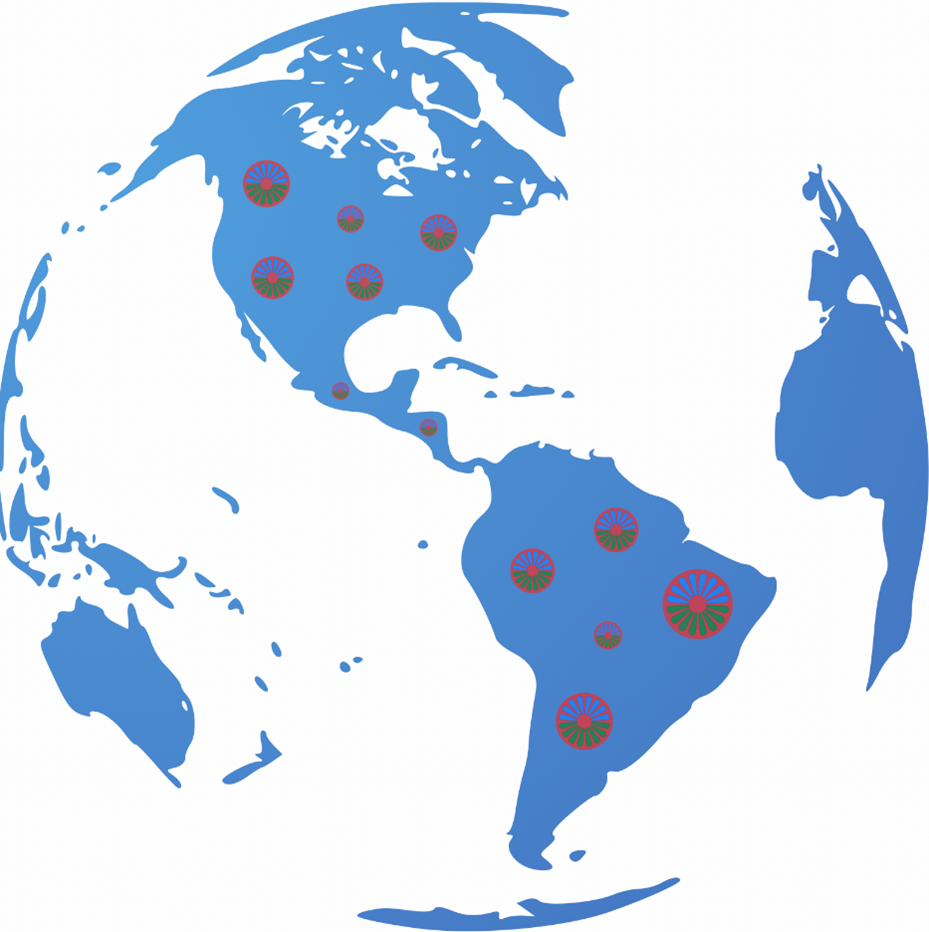
On 14 September 2026, OHCHR and partners launched the third round of the Romani Memory Map for the Americas.
The Romani Memory Map for the Americas continues to grow. Its third edition adds 22 new memory sites. The map now includes 72 sites across ten countries: Argentina, Brazil, Colombia, Cuba, the Dominican Republic, Guatemala, Mexico, Nicaragua, the United States, and Uruguay. With Uruguay and Nicaragua represented for the first time, the Map expands both its geographical reach and the diversity of Romani histories it brings to light.
This new edition also opens important new perspectives on Romani memory in the Americas. For the first time, legal frameworks and human rights violations feature prominently on the Map, alongside sites documenting Romani presence, culture and contributions. The new entries include routes of escape and resistance, massacres, discriminatory laws and migration policies, as well as contemporary legislation recognizing Romani culture, memory and rights.
Taken together, these sites reveal connections that transcend national borders and historical periods. They show how persecution and exclusion were embedded not only in social practices, but also in laws, institutions and State policies across the Americas, while highlighting histories of resistance, survival, cultural contribution and recognition.
We invite you to explore the Romani Memory Map for the Americas in English, Spanish, and Portuguese through the links below:
- English: https://imda-ohchr.github.io/roma-memory-map/v13/en/
- Spanish: https://imda-ohchr.github.io/roma-memory-map/v13/es/
- Portuguese: https://imda-ohchr.github.io/roma-memory-map/v13/pt/
Full details on the Romani Memory Map are available here in English, Spanish and Portuguese.
The Romani Memory Map for the Americas is a collective, crowd-sourced initiative led by the Office of the United Nations High Commissioner for Human Rights (OHCHR) in partnership with Gonzaga University (USA); the Institute of Ethnology of the Czech Academy of Sciences (Czechia); the Prague Center for Romani Histories (Czechia); the Institute of Anthropological Sciences of the University of Buenos Aires (Argentina); the Laboratory for the Study of Ethnicity of LEER/University, São Paulo (Brazil); the Associação Internacional Maylê Sara Kali (AMSK); and Kalo Chiriklo – Collective Against Antigypsyism, alongside Romani human rights defenders and civil society organizations from the Americas and beyond.
Inquiries to: alinemiklos@gmail.com ; claude.cahn@un.org
Background
The Romani Memory Map for the Americas builds on OHCHR’s work on memorialization and antigypsyism, and was a specific commitment of the May 2023 roundtable on memorialization as a strategy to tackle antigypsyism in the Americas. OHCHR’s work on Roma rights – including addressing antigypsyism, the specific form of racism facing Roma -- is underpinned by the 2015 report by the UN Special Rapporteur on Minority Issues. This work also builds on the insights of the UN Special Rapporteur on the promotion of truth, justice, reparation and guarantees of non-recurrence, who noted, in a 2020 report:
“… the crucial role played by memorialization processes in the context of transitional justice, which is fully recognized by the rules and standards of contemporary international law. The work carried out on these past violations serves as a basis for reflection on the present and identification of contemporary issues related to exclusion, discrimination, marginalization and abuses of power, which are often linked to toxic political cultures. Positive work in the area of memory not only helps to build democratic cultures in which human rights are respected but also fulfils the legal obligation of States to guarantee human rights.”
Process
Three rounds of calls for inputs to the Map have been launched since July 2023, the most recent one in December 2025.
Two independent review bodies – an Expert Panel and a Review Board -- involving Roma human rights defenders from the Americas and academic institutions have been convened to review the materials submitted in response to the call for inputs. The review bodies carried out detailed consultations, assessing inputs and carefully vetting materials according to criteria including appropriateness, historical accuracy, to ensure a human rights-basis and to review according to the principle of do-no-harm.
On the basis of these review processes, 72 Romani Memory Points from throughout the Americas have been included in the first and second iterations of the Map. A full process summary is available at link.
Roma Rights Events at the Human Rights Council
On the occasion of the 25th anniversary of the Durban Declaration and Programme of Action – the outcome commitments of the 2001 World Conference against Racism – the Council of Europe Commissioner for Human Rights and the Office of the United Nations High Commissioner for Human Rights (OHCHR), together the Permanent Missions of Ireland and North Macedonia to the United Nations in Geneva, undertake joint events at the 61st session of the United Nations Human Rights Council.
The FLYER and CONCEPT NOTE for these events are available for download here, as well as on the website of the Council of Europe.
The Exhibition
From 23 February-3 March, OHCHR and the Council of Europe Commissioner for Human Rights will present at Palais des Nations in Geneva, a hybrid exhibition on the human rights of Roma and Travellers in Europe and the Americas.
The exhibition features photographs from the travelling exhibition The Unheard 12 Million, an initiative by the Council of Europe Commissioner for Human Rights, Michael O’Flaherty, as part of his priority work on the human rights of Roma and Travellers. It visually supports the Commissioner’s book The Unheard 12 Million – The Unstoppable Voices of Roma and Traveller Women, published on 1 October 2025.In his book, the Commissioner tells the first-hand stories of resilience and resistance of members of Roma and Traveller communities, particularly women and girls. Based on the Commissioner’s travels and personal encounters from June 2024 to April 2025, the book uses direct quotes and narrative photography, including images by an award-winning photojournalist, to highlight the reality of their experiences. While addressing Europe as a whole, the book and exhibition specifically feature experiences from Finland, Greece, Ireland, North Macedonia, and Slovakia.
At the exhibition, OHCHR will present, on an interactive screen, the crowd-sourced initiative Romani Memory Map for the Americas. The Map builds on OHCHR’s work on memorialization and antigypsyism. OHCHR’s work on Roma rights – including addressing antigypsyism, the specific form of racism facing Roma – is underpinned by the 2015 report by the UN Special Rapporteur on Minority Issues. The Romani Memory Map for the Americas is a crowd-sourced initiative developed jointly by the OHCHR, Gonzaga University, USA; Institute of Ethnology of the Czech Academy of Sciences, Czechia; Prague Center for Romani Histories, Czechia; Institute of Anthropological Sciences at University of Buenos Aires, Argentina; Laboratório de Estudos sobre Etnicidade (LEER /Universidade de São Paulo), Brazil; Associação Internacional Maylê Sara Kali (AMSK) and Kalo Chiriklo – Collective Against Antigypsyism. Funding from the Bader Philanthropies has helped make this work possible. The Map is available online in English, Spanish and Portuguese.
The Council of Europe Commissioner for Human Rights's photo exhibition was curated by the European Roma Institute for Arts and Culture (ERIAC) and is set to tour European cities to give visibility to the human rights situation of Roma and Travellers.It can be hosted upon request to the Office of the Council of Europe Commissioner for Human Rights at commissionerHR@coe.int.
The 26 February Hybrid Side Event
United Nations independent experts, the Council of Europe Commissioner for Human Rights, and Romani human rights defenders from various parts of Europe and the Americas discuss human rights issues facing Roma and Travellers, challenges in addressing antigypsyism, and ways forward. Information about in-person attendance and online participation is available by scanning the QR code in the FLYER, or by consulting this LINK.
The 25th Anniversary of the Durban Declaration and Programme of Action
These events take place in the context of year-long commemorations of the outcome document and commitments made at the 2001 World Conference Against Racism. In parallel, during the same week, the United Nations Human Rights Council will convene a separate the United Nations Human Rights Council will hold a High-level panel discussion on the commemoration of the twenty-fifth anniversary of the adoption of the Durban Declaration and Programme of Action.

Memorialization as a Strategy to Tackle Antigypsyism
Action Program 2024
During 2-3 August 1944, the administrators of the Auschwitz-Birkenau Nazi death camp closed the "Zigeunerlager", the part of the camp in which Roma were interred. During these days, more than 3,000 Roma were killed, including women, children and older people. Today, 2 August is honoured as the international day commemorating the Roma Holocaust. 2 August 2024 marks the 80th anniversary commemorations of the Roma Holocaust.
The August 2024 80th anniversary commemorations of the Roma Holocaust are an opportunity to strengthen government, civil society and other public engagement for memorialization, as well as to capacitate Roma human rights defenders to engage to address human rights issues facing Roma, and to highlight the impact of antigypsyism. The road to and following the 2 August 2024 anniversary presents extensive opportunities for awareness-raising, as well as to advance Roma rights, Roma inclusion, challenging anti-gypsyism, and advancing public understanding and public memory as concerns human right issues facing Roma worldwide. OHCHR will work with partners before, during and after the 80th anniversary commemorations, in a range of actions aimed at strengthening human rights work to address antigypsyism and encouraging the implementation of public memorialization policies at national levels.
Background
The situation of Roma worldwide, with particular focus on anti-gypsyism, is the subject of a 2015 report by the UN Special Rapporteur on Minority Issues.
The persecution and exclusion of the Roma did not begin with Nazism and did not end with it. Recent studies show that Roma experience very high levels of discrimination and hostility in Europe and in the Americas. Violations of the human rights of Roma are reported in practically all areas of life: education, health, housing, work, access to services and in other spheres of life. This situation is primarily the result of the antigypsyism, the specific form of racism facing Roma. Outbreaks of anti-Roma racism have plagued every European society without exception, and antigypsyism is present on other continents as well. In the Americas, prejudice and discrimination also marked the trajectory of Romani families since their arrival in the 16th century, subjecting them to persecution, deportation and antigypsy legislation enacted by successive governments. In times of crisis, as was the case with the COVID19 pandemic and the armed conflicts in Syria and Ukraine, prejudice and stigmatization increase, and with them heightened risk of human rights abuse.
In the coming period, further details of action will be published here, beginning with the launch in January 2024 of a crowd-sourced online Romani Memory Map for the Americas.
Memorialization as a Strategy to Tackle Anti-Gypsyism in the Americas
17-18 May 2023 - UPEACE, Costa Rica
The Indigenous Peoples and Minorities Section (IPMS) of the Office of the United Nations High Commissioner for Human Rights (OHCHR) and the University for Peace (UPEACE) organized the international roundtable event on "Memorialization as a Strategy to tackle Anti-Gypsyism in the Americas" on May 17-18, 2023.
The roundtable was done with the involvement of the United Nations Special Rapporteur on Minority Issues and in partnership with civil society organizations.
The roundtable followed up on the UN's global efforts to consolidate the rights of Roma people and combat antigypsyism, its historical roots and its impact on the present. The event also aims to take stock of the current state of Roma inclusion policies in the Americas and to encourage the processes of construction and valorization of the memory of this people in public and private spaces.

Roma rights in pictures

Romani slum "Na Demetri", Kosice, Slovakia. © REUTERS/Petr Josek
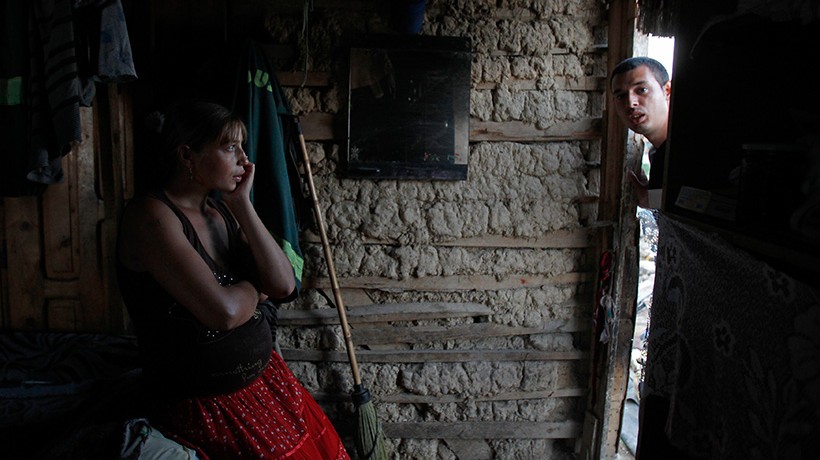
Craica slum, Baia Mare, Romania. © REUTERS/Bogdan Cristel
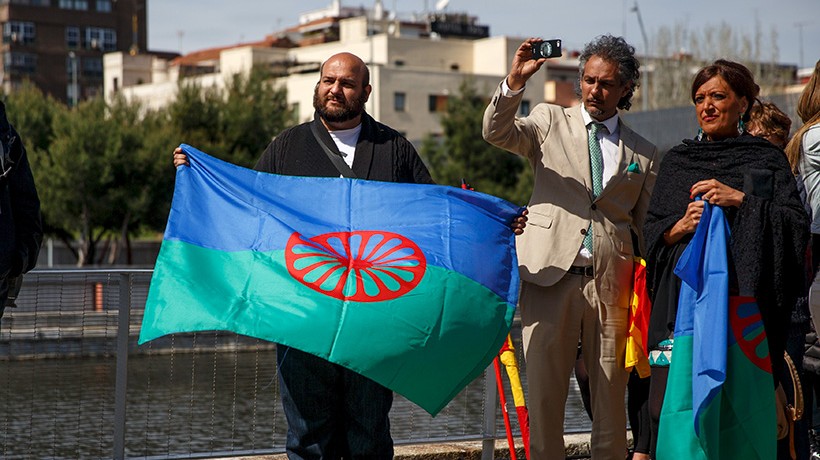
Celebration of International Roma Day April 8, 2015, in Madrid, Spain. © REUTERS/Andrea Comas
Roma and Travellers face widespread discrimination (and often segregation) in many areas of life including in:
- policing
- justice systems
- housing
- education
- employment
- health
In some countries, Roma are dramatically overrepresented among children taken into state care. There is widespread denial that discrimination and racism against Roma exists.
Pursuant to a Human Rights Council resolution, the UN Human Rights Office supported the Special Rapporteur on Minority Issues in 2015 in producing a global study on the human rights situation of Roma worldwide. The Human Rights Council resolution and the study recognize that Anti-Gypsyism—the specific form of racism facing Roma—constitutes a major obstacle to the successful social inclusion of Roma and the full respect of their human rights.
The UN Human Rights Office works in a number of countries to strengthen the effective exercise of human rights by Roma and Travellers. It does this through supporting work to develop government policies on Roma inclusion, strengthening the capacities of Roma—and in particular Romani women—to take part in local, regional, national and international decision-making, as well as by working to challenge patterns and practices of discrimination and abuse. A number of Roma rights activists from countries around the world have also taken part in OHCHR’s Minority Fellowship Program.
See also the OHCHR publications addressing Forced Evictions of Roma and Travellers (2014), the housing rights of Roma in France (2018), and racial discrimination in Italy (2019).
Feature stories
Roma: Holocaust anniversary draws painful memories and hope for more rights
Eighty years ago, on 2-3 August 1944, more than 3,000 Roma were murdered in Auschwitz-Birkenau, the largest Nazi concentration and death camp. For Romani human rights defenders and Romani survivors, remembering the dark past is also an opportunity to advance public memory of Roma, strengthen their human rights, and challenge present-day racism.
Roma and Memorialization: Advancing Recognition and Remedy for the Dark Chapters of the Romani Past and their Impact on the Present
In September 2022, OHCHR convened, together with partners CHACHIPEN Project, the Central Council of German Sinti and Roma, Federación de Asociaciones Gitanas de Cataluña (FAGIC), the European Roma Grass-root Organizations (ERGO) Network and Asociatia Fast Forward (AFF). Other partners to this event were the World Council of Churches (WCC), European Roma Institute for Arts and Culture (ERIAC), Dikh He Na Bister! (Look and don’t forget!), and the Roma Advisory Council (RAC, North America), the international stocktaking roundtable Roma and Memorialization: Advancing Recognition and Remedy for the Dark Chapters of the Past and their Impact on the Present. The roundtable examined ways to cobat anti-Gypsyism/anti-Roma racism by advancing truth, recognition, reparations, trust and reconciliation processes at local, national and international levels. The event aimed at taking stock of the state-of-play, identifying the next steps in this regard, and drawing up a list of recommendations for further action. Read the Outcome Document of the Roundtable here.
OHCHR Support for Roma Community Mediators in the Republic of Moldova
In 2021, OHCHR launched a pilot institution of Roma community mediators in the Transnistrian region of the Republic of Moldova, similar to the one that exists in Moldova proper. This initiative was based on the findings of a needs assessment conducted 2020 among the Roma community and the Roma leaders in the region. Since then, over 650 marginalized Roma benefited annually from the services provided by the Roma community mediators. This resulted in an increase in access for the Roma population in the Transnistrian region to public services in a number of key areas, including education, health, social security, employment, housing, the documentation required for identification and guardianship, and others.
Working for a more inclusive policy towards migrant Roma in France
The UN Human Rights Regional Office for Europe works with civil society organizations and the French Government to change the policy of forced evictions of migrant Roma in France. Read our 2018 comprehensive mission report here.
Paving the way to a better future for Roma families in Serbia
The United Nations Human Rights Office and its partners engaged with the Serbian Government to ensure human rights standards were observed in the process of moving Roma families from the slums of Serbia’s capital Belgrade. See our film here.
The politics of exclusion continue in and around Rome
Roma migrants and their defenders describe the living conditions in camps, and forced evictions by the local authorities in Rome, Italy.
Empowering Roma in rural Hungary
UN and civil society are making efforts to empower the Roma in Cserehát region in their struggle against socio-economic exclusion and racial discrimination.
Bringing inclusion to Roma communities in Moldova’s rural areas
In Moldova, efforts to improve access to basic services of Roma living in some of the most excluded rural communities contribute to support their integration.
Between tradition and exclusion: struggling for the right to pitch a trailer
Candy Sheridan advocates for the rights of the Irish Travellers who were evicted from Dale Farm in Basildon, United Kingdom, over a year ago.
“A little bit of money makes a real difference”
Romani human rights activist, Valeriu Nicolae, runs and funds from his own resources a project aimed at giving young people in a Bucharest ghetto a future free of drugs and crime through education and sports.
Innovative grassroots projects for Roma integration in the Czech Republic
The UN Human Rights Office has welcomed projects for the integration of the Roma population launched by the local authorities in Ostrava, Czech Republic. Regrettably, critical civil society voices were excluded in the process.
Politics of exclusion continue in and around Rome
Roma migrants and their defenders describe the living conditions in camps, and forced evictions by the local authorities in Rome, Italy. Read our 2020 mission report here.
Read the summary of international norms related to the forced eviction of Roma.
Related links
Roma mediators in Moldova enable Roma families to enjoy their human rights
13 September 2024
Story: Roma: Holocaust anniversary draws painful memories and hope for more rights
28 August 2024
Call for Inputs: Romani Memory Map for the Americas
Deadline 15 June 2024
Story: Memorializing the Romani past: “We exist, respect our humanity"
8 April 2024