 Welcome to the United Nations

 OHCHR




Human rights don’t protect themselves.
Your donation protects the essentials we all rely on.
11 December 2025
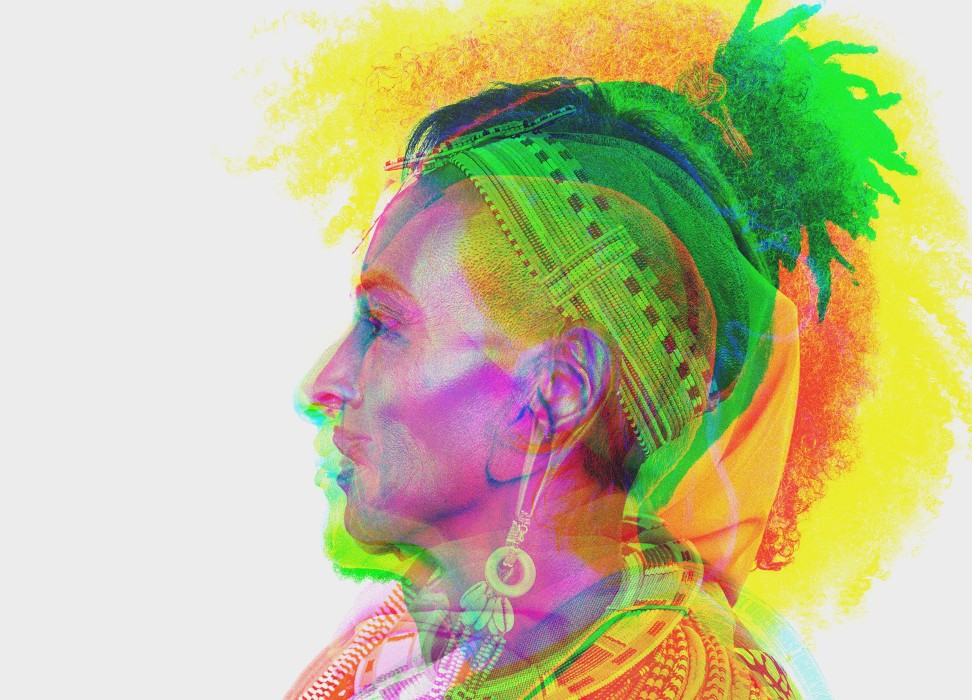
“Respect isn’t just kindness — it’s recognition,” said Durar Asad, 18, Sweden, in an interview with UN Human Rights.
Durar joined fellow 17-year-olds Ava Baker and Leylo Gure Sanweyne in Geneva, where the three Swedish nationals took part in the Committee on the Elimination of Racial Discrimination’s (CERD) recent review of Sweden.
Alongside other teenagers, Ava, Durar and Leylo helped write an alternative report for CERD, supported by Save the Children Sweden and Save the Children Youth Sweden.
At the High-level Event marking the 60th anniversary of the International Convention on the Elimination of All Forms of Racial Discrimination (ICERD) Michal Balcerzak, Chair of CERD, underlined the essential role of civil society in efforts to eradicate racial discrimination.
Balcerzak highlighted the participation of several inspiring teenage girls from Sweden who engaged with the Committee during its 116th session, showing great commitment in speaking out against racial discrimination.
According to CERD, their thoughtful written and oral contributions serve as a powerful reminder of the importance of including the voices of children and young people in the Committee’s work.
Their engagement also encourages children and youth from other countries to share their experiences, contribute to periodic reviews and other work of the Committee, and take part in the broader efforts to combat racial discrimination worldwide, members of CERD said.
“It was the first time I saw the Committee receive an alternative report written by children. It was the report on which I placed the greatest attention,” said CERD’s Vice-Chair Régine Esseneme.
The report, titled “Our Reality – Your Responsibility,” compiles the voices of 74 children across Sweden and documents how racism affects them in schools, public spaces, online, and in everyday interactions.
Written by eight 17-year-olds, the report highlights patterns of racial discrimination — such as racist slurs in classrooms, unequal treatment by teachers, negative stereotypes in public, and barriers in the job market — and presents concrete proposals for change. The report’s central message is clear: racism is pervasive, normalised, and too often dismissed by adults, and children want their experiences to be taken seriously.
For Ava, respect means accepting others’ decisions, lifestyles and ways of thinking, as well as not judging, but listening and understanding.
“Racism in Stockholm is so common that it’s normal to me, I’m used to it, which is not good,” she said.
Ava worries her hijab will reduce her chances of being hired and has even considered removing her photo from her CV because she thinks it will minimise her chances of finding a job in the future.
“[Respect for me is] being treated like everyone else and being accepted as the person I am,” said Leylo. “[Yet] many teachers actually kept their job, even after they said something racist.”
“Teachers don’t believe the students and they say, ‘that person wouldn’t do that’,” she added.
Durar has clarity when it comes to racism: it’s systemic, not accidental, she said. “Too many people still believe racism is a misunderstanding instead of a structure.”
We see racism everywhere – in schools, in shops, on buses. Sometimes it’s not something said outright, but looks, suspicions. It hurts. Racism has become a norm. Adults are supposed to stop it, but that doesn’t seem to have worked.
Children quoted in the report “Our Reality – Your Responsibility”
The experiences the children described are not isolated. They reflect patterns the Committee has seen across many countries, where racism is not only expressed through open hostility but embedded in everyday systems and attitudes.

Durar Asad (left) and Leylo Gure Sanweyne (right), at Palais Wilson in Geneva, Switzerland, for CERD’s review of Sweden. © OHCHR
The children’s report and participation resonated strongly within CERD. Esseneme praised the teenagers for speaking with assurance about the discrimination they face.
According to UN Human Rights, the normalisation that the children described is part of a wider pattern of resurgent racism, amplified by political discourse, social media, and entrenched stereotypes around the world.
This is why, at the High-Level Event, Deputy High Commissioner Nada Al-Nashif warned how racial discrimination intersects with other forms of discrimination in pernicious ways, calling on States to honour victims by renewing their commitment to combating racial discrimination.
The High-Level Event also marked the end of the ICERD60 campaign, a year-long effort to commemorate six decades of the Convention and renew global commitments to eliminate racial discrimination.
The children’s testimonies also raised a deeper question: why do these experiences persist, even in countries with strong legal protections?
The three teenage girls described a system that avoids confronting the reality of racism. They explained that this denial is felt in schools, where responses to racism vary depending on who a child turns to, and where clear, consistent rules are missing.
For them, the deeper issue is that leaders act as if the system is functioning properly; without honesty and real responsibility, any proposed solution remains superficial, they said.
According to UN Human Rights, many countries around the world face various challenges about accessible and effective remedies for victims of racial discrimination.
“It’s really important to make sure there’s avenues for people to have recourse at the domestic level, because racial discrimination is happening at home,” said Professor Claire Charters, an Indigenous rights expert and law professor at the University of Auckland, New Zealand.
Racism is not only hatred and violence. It exists in silence, in rules that seem neutral.
Child quoted in the report “Our Reality – Your Responsibility”
Esseneme warned that many States have good laws but poor implementation.
“Most States have developed legal and institutional frameworks, but their effectiveness is not perceived by victims,” she said. “Without reliable statistics, it is difficult for a State to plan strategic actions for inclusive development.”
Durar agreed. For her, institutions must be brave enough to admit the problem. “When you can name it, you can measure it and fix it.”
Esseneme added that this kind of contradiction appears in many countries, for instance, States often present structures to combat hate speech, yet neglect to define hate speech in their criminal legislation, making those very structures ineffective.
Al-Nashif said that ICERD was revolutionary because it established the first international anti-racism machinery for implementation, going far beyond statements of principle and previous instruments.
CERD has elaborated 39 General Recommendations on issues relating to racial discrimination to which it believes States parties should devote more attention. Topics include combatting racist hate speech, racial profiling by law enforcement officials, right to health and xenophobia.
Charters said the Committee’s work is vital and must be grounded in local realities. She explained that tackling racial discrimination requires domestic engagement, not only Geneva-based dialogue.
Charters added that lasting progress demands structural reform, noting that “constitutional transformation is probably the most important step you can take to entrench freedom from discrimination.”
Her emphasis on deep structural reform echoed what the children were also calling for in more immediate terms.
“Stop assuming you know our experiences better than we do. Equality starts with believing young people’s reality,” Durar said.
Leylo strongly believes that adults should listen and show respect to young racialised people, not talk to them like they’re less than them.
For Ava, Durar and Leylo, CERD’s response during the review stood in stark contrast to the silence they often encounter at home. They said they felt heard, noting that the Committee took their concerns seriously and brought them into a formal dialogue.
“Article 1 [of the UDHR] says that all human beings are born free and equal in dignity and rights,” Esseneme said. “But at the root of racism is the idea that some human beings believe they are superior to others, yet it is our diversity that makes the world beautiful.”
Ava, Durar and Leylo were especially struck by Esseneme’s firmness with the Swedish delegation, describing how she pressed for answers instead of allowing officials to avoid difficult questions — a gesture that, as Leylo put it, “made me really happy.”
The victims’ perspective is essential. Their testimony shows whether the State respects its commitments.
Régine Esseneme, Vice-Chair of CERD
Al-Nashif said that the objectives of ICERD remain elusive, which is why the work to end racial discrimination remains essential.
“This High-Level event is a reminder that the Convention exists and that States have these obligations. [It’s] a timely discussion at a moment when human rights are under attack,” Charters said.
Balcerzak stressed that at a time when the very existence of racial discrimination and racism is increasingly denied, the Committee calls on States, individuals, human rights defenders, and civil society organizations to persist in their efforts to expose and combat racial injustice.
If the people with the highest status don’t do something, then who will?
Ava Baker, 17, a Swedish high-school student

CERD High Level Event to Commemorate the 60th Anniversary of the adoption of the International Convention on the Elimination of All Forms of Racial Discrimination in Geneva, Switzerland. © OHCHR
VIEW THIS PAGE IN:
Your donation protects the essentials we all rely on.