 Welcome to the United Nations

 OHCHR


Development finance institutions
OHCHR and the right to development
According to the UN Conference on Trade and Development, the investment gap for the Sustainable Development Goals (SDGs) increased from $2.5 trillion in 2015 to more than $4 trillion in the year 2023. The increase is the result of both underinvestment and additional needs. Much of the needed financing will come from multilateral and bilateral development finance institutions (DFIs). The term ‘DFI’ includes:
- Multilateral development banks (MDBs);
- Other international and regional financial institutions;
- National development banks and bilateral financing institutions;
- Export credit agencies;
- Private lenders.
DFIs also have important roles to play in the global effort to combat climate change and adapt to its effects and helping States realise the right to development.
DFIs and sustainable development
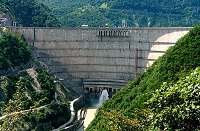
DFIs play a critical role in directly financing investments needed for the realisation of the SDGs and human rights and leveraging resources from the private sector. Investment in transport, energy, water, Information Communications Technology (ICT) and other infrastructure sectors is an important part of this effort, along with investment in productive sectors (such as finance, agriculture and industry), social sectors, digital transformations, and public administration, governance and institutional reform. MDBs including the World Bank Group and regional development banks also play important advisory and normative roles in connection with the development of national policy, legal and regulatory frameworks.
However, in order for DFIs to effectively contribute to sustainable development, it is crucial that they take necessary measures to avoid negative impacts on human rights as defined in international instruments and compatible national laws. Human rights risks may be particularly high in fragile and conflict-affected settings, where DFIs are increasingly active. Multilateral and bilateral DFIs are increasingly seeking to align their operational policies with international human rights standards, including the UN Guiding Principles on Business and Human Rights. The 2030 Agenda for Sustainable Development is grounded explicitly in international human rights law.
OHCHR’s work in relation to DFIs
OHCHR engages actively with MDBs and bilateral DFIs in order to help ensure that development financing activities and policies are consistent with international human rights standards and principles, and that development processes and outcomes are inclusive, equitable and sustainable. OHCHR has worked with numerous DFIs on:
- reviewing environmental and social safeguard policies, safeguard implementation guidelines, and sectoral strategies;
- strengthening remedy frameworks, independent accountability mechanisms and public information policies;
- strengthening approaches to managing risks of digitalization initiatives and value chains (upstream and downstream);
- identifying and addressing human rights risks of investment projects (including mega-infrastructure) at country level;
- strengthening policies and procedures relating to reprisals against project-affected communities;
- support for internal human rights policy development and capacity building; and
- strengthening access to remedy for human rights violations caused by investment projects.
Remedy

- Launch event for OHCHR Remedy in Development Finance: Guidance and Practice, in collaboration with Oxfam America, on 23 February 2022, including opening remarks by High Commissioner Bachelet and Speaker of the US House of Representatives Nancy Pelosi: see recording available.
- Policy brief: Remedy in Development Finance: Progress and Challenges in 2026 (March 2026)
- Launch event for OHCHR Remedy in Development Finance: Progress and Challenges in 2026 on 25 March 2026: see recording available
- One-page brief for policy-makers: Development Finance Institutions and Remedy (November 2025)
- Guide to Contractual Provisions for Remedy in DFI Financing (March 2026)
- IFC/MIGA draft Approach to Remedial Action: Comments and recommendations of the UN Human Rights Office (13 April 2023)
Digitalization risks

- Policy brief: Multilateral Development Banks and Digital Risks: the Role of Environmental and Social Safeguard Policies (September 2024)
- One-page brief for policy-makers: Development Finance Institutions and Digital Risks
Environmental and social safeguard policies

- Policy brief: Strengthening Supply and Value Chain Risk Management: The Role of Development Finance Institutions’ Environmental & Social Safeguard Policies (June 2025)
- Comparison table: MDB E&S Safeguard provisions on supply chains
- Comments on the draft Environmental and Social Policy of the European Bank for Reconstruction and Development (17 May 2024)
- Comments on the draft Environmental and Social Framework of the Asian Development Bank (29 April 2024)
- Comments on the Review of the FinDev Canada Environmental and Social Risk Management Policy (15 December 2023)
- Comments on the draft updated Integrated Safeguard System of the African Development Bank (17 May 2022)
- Comments on the draft Safeguards Policy of the German Environment Ministry’s International Climate Initiative (10 February 2022)
- Comments on the Draft Environmental and Social Sustainability Framework (ESSF) of the European Investment Bank (EIB) Group (August 2021)
- Comments on the review and update of the Asian Development Bank’s Safeguard Policy Statement (19 April 2021)
- OHCHR submissions on the Asian Infrastructure Investment Bank’s draft Environmental and Social Framework (6 November 2020)
- OHCHR submissions on the Inter-American Development Banks’ draft Environmental and Social Policy Framework (13 April 2020)
- OHCHR submissions for IDB Invest draft Environmental and Social Sustainability Policy (September 2019)
- OHCHR submissions for the EBRD’s draft Environmental and Social Policy (March 2019)
Sustainable infrastructure

Independent accountability mechanisms
- Statement on the Asian Infrastructure Investment Bank’s Project-Affected People’s Mechanism (4 March 2026)
- Comments on the Draft IFC/MIGA Independent Accountability Mechanism (CAO) Policy (16 May 2021)
- OHCHR submissions on the third review of the African Development Bank’s Independent Review Mechanism (4 February 2021)
- OHCHR submissions for the EBRD’s Project Accountability Policy (March 2019)
- Comments on the draft AIIB Project-affected Peoples’ Mechanism (March 2018)
Access to information policies
- OHCHR submissions for the EBRD’s Access to Information Policy (March 2019)
- Recommendations for IDB Invest’s Public Information Policy (August 2018)
- Recommendations for AIIB Policy on Public Information (March 2018)