
Speakers
H.E. Mr. Yackoley Kokou JOHNSON, Chair, Human Rights Council Seventh Intersessional Meeting for Dialogue and Cooperation on Human Rights and the 2030 Agenda for Sustainable Development
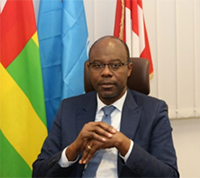
Ambassador Johnson, Permanent Representative of the Togolese Republic to the United Nations Office at Geneva, the World Trade Organization and other International Organizations in Geneva, was the vice President of the Human Right Council in 2020.
He was also a Member of the Human Rights Group on situations in 2019 and coordinator of the African Group on Human Rights issues in 2018.
Ambassador Johnson is currently the Chair of the Board of the Enhanced Integrated Framework (EIF), a program of Trade-Related Assistance for Least Developed Countries.
Prior to his appointment to Geneva, Mr. Johnson was the Ambassador of Togo to the United Kingdom of Great Britain and Northern Ireland from 2014 to 2016. Ambassador Johnson was a Member (Expert) of the Togolese Team to the United Nations Security Council (2012 - 2013), in charge of West African Issues, including the crisis in Mali and piracy in the Gulf of Guinea.
Prior to that, Ambassador Johnson held the positions of Secretary General of the Togolese Ministry of Social Action and National Solidarity and Chair of the National Adoption Committee from 2008 to 2011.
From 1999 to 2011, Mr. Johnson was Lecturer at the Lome University Faculty of Law and also at the Kara University Faculty of Law and Political Sciences from 2005 to 2011, both in Togo.
Ambassador Johnson holds a PhD in Public Law from the University of Auvergne-Clermont 1- France (1998) and several certificates in the field of social protection policies, notably from the ILO and the World Bank.
H.E. Mr. Jürg Lauber, President of the Human Rights Council
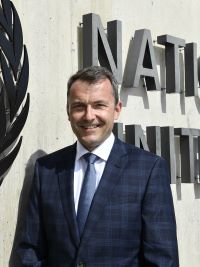
Jürg Lauber has been the Permanent Representative of Switzerland to the United Nations and to the other international organizations in Geneva since 1 September 2020. On 9 December 2024, Mr. Lauber was elected President of the Human Rights Council for 2025.
From 2015 to 2020, he served as Permanent Representative of Switzerland to the United Nations in New York. Between 2011 and 2015 he served as head of the United Nations and International Organisations Division in Bern. Between 2009 and 2011 he was Deputy Permanent Representative of Switzerland to the United Nations and other international organizations in Geneva and Permanent Representative of Switzerland to the Conference on Disarmament.
Between 2007 and 2009 he served as chef de cabinet to the President of the International Criminal Court in The Hague, Netherlands. As a diplomat he was posted in Bangkok, Bern, Beijing and the Permanent Mission of Switzerland to the United Nations in New York. Before joining the Federal Department of Foreign Affairs (FDFA) in 1993 he worked in peacekeeping missions in Namibia (UNTAG) and Korea (Panmunjom).
Jürg Lauber has a law degree from the University of Zurich. He was born in 1963 in Horgen, Switzerland.
H.E. Mr. Bob Rae, President of the United Nations Economic and Social Council (ECOSOC)
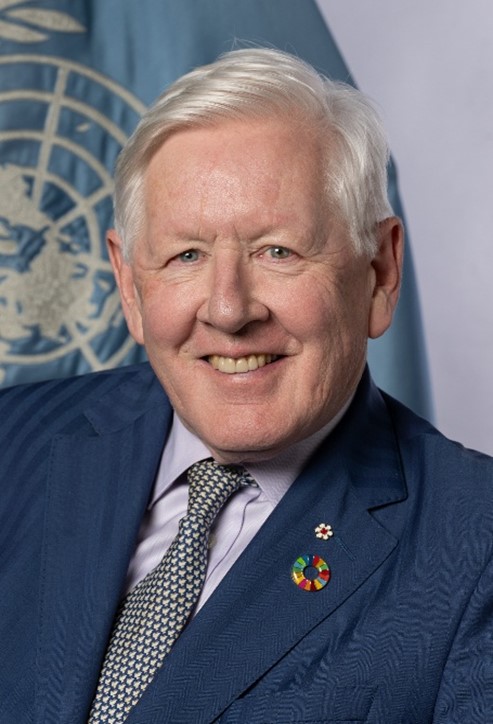
Bob Rae was elected the President of the 2025 session (July 2024 to July 2025) of the Economic and Social Council for the 2025 Session on 25 July 2024. Ambassador Bob Rae is the eightieth President of the Council.
He is currently the Ambassador and Permanent Representative of Canada to the United Nations. Before his appointment by the Government of Canada, Mr. Rae served as Canada’s special envoy on humanitarian and refugee issues, continuing the important work that he began in 2017 as Canada’s special envoy to Myanmar while also addressing other pressing humanitarian and refugee issues around the world.
The former premier of Ontario and former interim leader of the Liberal Party of Canada, Mr. Rae was elected 11 times to federal and provincial parliaments between 1978 and 2013. He stepped down as a member of Parliament in 2013 to return to legal practice and, in particular, to work with Indigenous communities and continue his work in education, governance and human rights. His passion for social justice dates back to his early days in student politics and community service.
Before his appointment as Permanent Representative, Mr. Rae was senior counsel at Olthuis Kleer Townshend LLP. In addition to his legal practice, he taught at the University of Toronto in the School of Public Policy and Governance, in the Faculty of Law and at Massey College and Victoria University, and he was a fellow of the Forum of Federations, Massey College and the Raoul Wallenberg Centre for Human Rights. He has also worked as a mediator and arbitrator with ADR Chambers. A former partner at Goodmans LLP, Mr. Rae led the restructuring of the Canadian Red Cross and the Toronto Symphony Orchestra and chaired the board of the Royal Conservatory of Music. He is the author of 5 books and a number of government reports.
Mr. Rae is a privy councillor, a companion of the Order of Canada and a member of the Order of Ontario and has numerous awards and honorary degrees from institutions in Canada and around the world. He received his Honours Bachelor of Arts degree in Modern History from the University of Toronto and a Master of Philosophy degree as a Rhodes Scholar at Oxford University and graduated from the University of Toronto Faculty of Law.
Mr. Volker Türk, United Nations High Commissioner for Human Rights
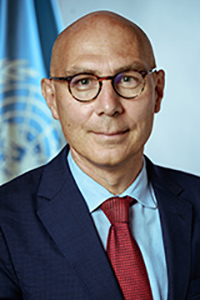 Volker Türk took up his official functions as High Commissioner on 17 October 2022.
He has devoted his long and distinguished career to advancing universal human rights, notably the international protection of some of the world's most vulnerable people - refugees and stateless persons.
Prior to this, Mr. Türk was the Under-Secretary-General for Policy in the Executive Office of the United Nations Secretary-General where he coordinated global policy work. He also ensured UN system-wide coordination in the follow-up to the Secretary-General’s “Call to Action for Human Rights” and his report, Our Common Agenda, which sets out a vision to tackle the world’s interconnected challenges on foundations of trust, solidarity and human rights. He previously served as Assistant Secretary-General for Strategic Coordination in the Executive Office of the Secretary-General (2019-2021).
As Assistant High Commissioner for Protection in the Office of the United Nations High Commissioner for Refugees (UNHCR) in Geneva (2015-2019), Mr. Türk played a key role in the development of the landmark Global Compact on Refugees.
Over the course of his career, he held a number of key positions including at UNHCR headquarters where he served as Director of the Division of International Protection (2009-2015); Director of Organizational Development and Management (2008-2009); and Chief of Section, Protection Policy and Legal Advice (2000-2004). Mr. Türk also served UNHCR around the world, including as Representative in Malaysia; Assistant Chief of Mission in Kosovo and in Bosnia and Herzegovina, respectively; Regional Protection Coordinator in the Democratic Republic of the Congo and in Kuwait.
Mr. Türk holds a doctorate in international law from the University of Vienna and a Master of Laws degree from the University of Linz, Austria. He has published widely on international refugee law and international human rights law. He is fluent in English and French and has a working knowledge of Spanish.
H.E. Ms. Alicia Bárcena, Secretary of Environment and Natural Resources, Mexico
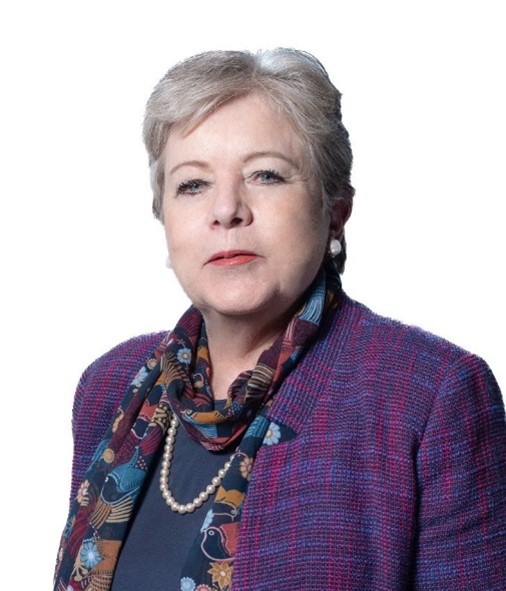
Alicia Bárcena served as Minister of Foreign Affairs from June 2023 to September 2024. Previously, she was the Ambassador of Mexico to Chile.
From 2008 to 2022, she held the position of Executive Secretary of the Economic Commission for Latin America and the Caribbean [ECLAC]. She also served as Deputy Executive Secretary and Director of the Division of Environment and Human Settlements at ECLAC.
At the United Nations, she was the Deputy Secretary-General for Management, Chief of Staff, and Deputy Chief of Staff to the former UN Secretary-General, Kofi Annan. Additionally, she served as Coordinator of the Sustainable Development Program for Latin America and the Caribbean at the United Nations Development Program [UNDP]. and as Coordinator of the Environmental Citizenship Project at the United Nations Environment Program [UNEP].
In 1982, she became the first Vice Minister of Ecology in Mexico, at the then Ministry of Urban Development and Ecology. She also held the position of Director-General of the National Fisheries Institute in 1988.
She holds a degree in Biology and a Master's in Ecology from the National Autonomous University of Mexico [UNAM]. and a Master's in Public Administration from Harvard University. She is the author of more than 50 publications in various international media and academic journals.
Dr. Mahmoud Mohieldin, UN Special Envoy on Financing the 2030 Sustainable Development Agenda
Mahmoud Mohieldin is an economist with over 30 years of experience in international finance and development. He serves as the United Nations Special Envoy on Financing the 2030 Sustainable Development Agenda. Additionally, Dr. Mohieldin is a Global Ambassador to the Race to Zero and Race to Resilience campaigns for the High-Level Climate Champions and was the UN Climate Change High-Level Champion for COP27.
In November 2020, he was appointed the Executive Director at the International Monetary Fund (IMF) and held the position for four consecutive years. His constituency included Bahrain, Egypt, Iraq, Jordan, Kuwait, Lebanon, Maldives, Oman, Qatar, Somalia, United Arab Emirates, and Yemen.
From 2010 to 2020, Dr. Mohieldin's career at the World Bank Group (WBG) spanned, where he held several pivotal roles, including Senior Vice President for the 2030 Development Agenda, United Nations Relations, and Partnerships. Moreover, he served as Managing Director, overseeing Human Development, Sustainable Development, Poverty Reduction, Economic Management, Finance and Private Sector Development, and the World Bank Institute. Additionally, he was the World Bank President’s Special Envoy on the Millennium Development Goals (MDGs), the Sustainable Development Goals (SDGs), and Financing for Development, as well as Corporate Secretary and Executive Secretary to the Development Committee of the WBG's Board of Governors.
Prior to joining the WBG, Dr. Mohieldin served as the Minister of Investment of Egypt from 2004 to 2010. During his tenure, he led significant policies and measures that enhanced Egypt’s business environment, reformed the financial services industry, and restructured the state-owned enterprises.
Dr. Mohieldin is the Chairman of Africa’s Network Advisory Board of Glasgow Financial Alliance for Net Zero (GFANZ), the Chairman of the Advisory Board for the Regional Center for Sustainable Finance (RCSF) established by the Egyptian Financial Regulatory Authority, and the Chairman of the Advisory Board for Africa Capital Hub (ACH). He also served on several Boards of Directors in the corporate and financial sectors, as well as the Central Bank of Egypt.
He holds a Ph.D. in Economics from the University of Warwick, an MSc. in Economics and Social Policy Analysis from the University of York, a Diploma in Quantitative Development Economics from the University of Warwick, and a B.Sc. in Economics from the Cairo University. He also participated in Executive Programs at the Wharton Business School, Massachusetts Institute of Technology (MIT), and Georgetown University.
Dr. Mohieldin has authored several books, papers and reports; some of his recent work include “Business, Government and the SDGs: The Role of Public-Private Engagement in Building a Sustainable Future” (Palgrave Macmillan, 2022) and “The Political Economy of Crisis Management and Reform in Egypt” (Palgrave Macmillan, 2024), in addition to publishing numerous articles in leading journals in the fields of economics, finance, debt, investment, climate change, and development.
Mr. Javier Palummo, Special Rapporteur on Economic, Social, Cultural, and Environmental Rights (REDESCA) at the Inter-American Commission on Human Rights (IACHR)
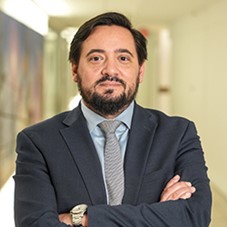
Javier Palummo Lantes is a lawyer with a PhD in Law and Social Sciences from the Universidad de la República (Uruguay) and a PhD in Human Rights from the Universidad Nacional de Lanús (Argentina). He also holds a master's degree in Public Policy and Children's Rights and has studied at renowned institutions and universities in Chile, Italy, Peru, Sweden, and Finland.
His career includes membership as an independent expert in United Nations bodies such as the Human Rights Council Advisory Committee and the Working Group on Communications of the Complaint Procedure before the Council, and he has been Director of Research and Information Management and Academic Coordinator of the International School of the MERCOSUR Institute of Public Policy on Human Rights from 2015 to 2023.
He has more than 20 years of professional experience in the field of human rights, DESCA, academia, civil society, government and international organizations, where he has worked as an expert, researcher, director and project coordinator, and has experience in public management in the area of public policies for social development, children's and women's rights.
H.E Ms. Patricia Ann Hermanns, Ambassador and Permanent Representative of the Commonwealth of The Bahamas to the United Nations Office and other International Organizations in Geneva
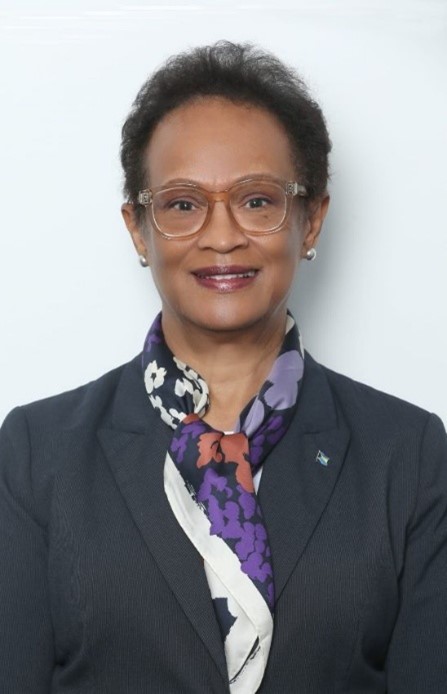
Patricia Hermanns took up her current position in May 2022.
She started her career in international banking with Royal Bank of Canada International in The Bahamas and served in managerial capacities in both the international and domestic arms of The Royal Bank of Canada for before transitioning to the life and health insurance sector in 1989.
During her tenure in the insurance sector, she held the position of President and CEO of two publicly traded insurance companies consecutively becoming the first woman to do so in each instance.
Ms. Hermanns transitioned from the insurance sector to become Chief Executive Officer of the National Insurance Board of The Bahamas managing an organization with assets in excess of B$ 1 billion. As CEO of the Board, she oversaw the management of the national pension scheme including its unemployment and occupational health and safety benefits and managed the delivery of those benefits throughout The Bahamas.
In 2019 she was appointed as Chairman of University Residence Services Ltd, a company charged with the expansion of the physical plant of the University of The Bahamas through the development of a complex multi-purpose structure encompassing commercial and residential space for students. She held this position until her appointment as Ambassador and Permanent Representative in 2022.
In other areas of her professional career, Ms. Hermanns served as a member of the government’s steering committee responsible for assessing the feasibility of creating a local securities exchange and was elected as the first Deputy Chairman of the Bahamas International Securities Exchange (BISX) when it was launched in 1999. She also served as Deputy Chairman of the Securities Commission of The Bahamas, Director of Bank of The Bahamas, and Director of Bahamas Electricity Corporation (BEC) / Bahamas Power and Light (BPL). She currently serves as a Trustee of the Anglican Diocese Pension Fund. She is also a member of YPO International, having joined that organization in 1999.
Ms. Hermanns obtained her bachelor’s degree in Economics and Spanish at New York University and an MBA from the University of Miami. She also studied at the University of Madrid earning a diploma in Hispanic studies. She is fluent in Spanish and has a working knowledge of French.
H.E. Mr. Mxolisi Nkosi, Ambassador and Permanent Representative of South Africa to the United Nations Office at Geneva and other International Organizations in Switzerland
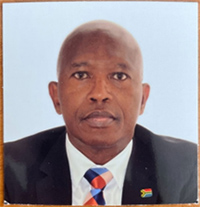
Mxolisi Nkosi has served in several senior positions in the Foreign Ministry of post-Apartheid South Africa. Between February 2012 and March 2016, he was the South African Ambassador to the Kingdom of Belgium, the Grand Duchy of Luxembourg and the Head of Mission to the European Union. Until his appointment as South Africa’s Ambassador to the United Nations in Geneva, he was the Head of Global Governance and Continental Agenda in the South African Foreign Ministry, and President Cyril Ramaphosa’s Sherpa to G7 Outreach Sessions. An expert in the field of international relations and diplomacy, Nkosi previously headed Africa Branch in the Foreign Ministry. He has travelled extensively throughout the world and in Africa, and accompanied high-level delegations of former President Thabo Mbeki, President Jacob Zuma, former Foreign Ministers Nkosazana Dlamini-Zuma and Maite Nkoana-Mashabane, and now President Cyril Ramaphosa and Minister Naledi Pandor.
Before joining the government, Nkosi was a trade union leader, where he served as the Deputy General Secretary of the South African Democratic Teachers Union (SADTU), an affiliate of the Congress of South African Trade Unions (COSATU). At the same time, he was also a member of the Provincial Executive Committee of the South African Communist Party (SACP). Nkosi was a student and youth activist in Soweto, occupying several leadership positions in the Azanian Students' Congress (AZASO) and in the South African Students' Congress (SANSCO). Trained as a teacher, Nkosi holds a Master's degree in International Relations and Diplomacy.
Ms. Yuefen Li, Senior Advisor on South-South Cooperation and Development Finance, South Centre, Geneva
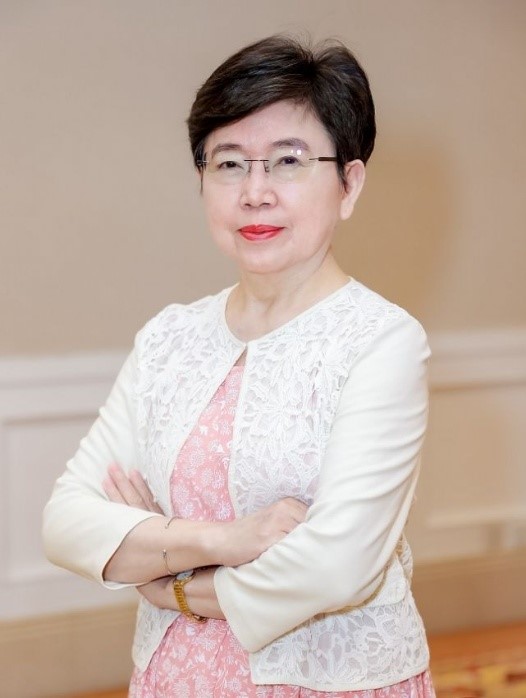
Yuefen LI is the South Centre’s G20 Sous-Sherpa. She served as the United Nations Independent Expert on Foreign Debt and Human Rights. She has worked in the United Nations Conference on Trade and Development (UNCTAD) for 24 years and held various senior positions including Head of Debt and Development Finance, Senior Economic Affairs Officer and manager of Projects on Responsible Sovereign Lending and Borrowing Principles, and Sovereign Debt Workout Mechanism. Before joining UNCTAD, she was a lecturer at the University of International Business & Economics in Beijing. She was a guest professor at Tsinghua University. She has published books, papers and articles in refereed professional journals and newspapers on issues relating to debt, development strategies, South-South cooperation, finance, and trade. She has contributed extensively to UNCTAD and South Centre publications and documents.
Dr. Ahilan Kadirgamar, Senior Lecturer, Department of Sociology, University of Jaffna, Sri Lanka
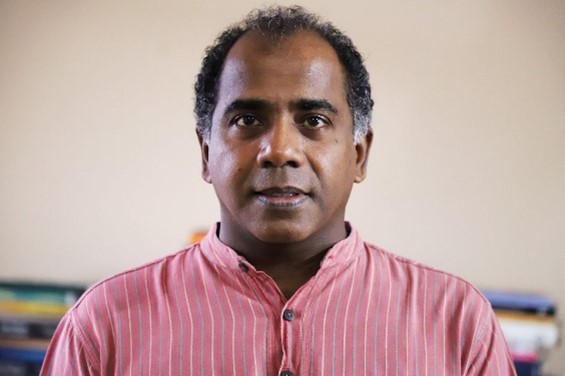
Ahilan Kadirgamar holds a PhD in Anthropology from the Graduate Center, City University of New York and a MA in Economics from the New School for Social Research. He is a fortnightly columnist in the Daily Mirror in Sri Lanka and regularly writes on the political economy of Sri Lanka in forums such as The Hindu and the Economic and Political Weekly in India. His research interests include agrarian change, co-operatives and economic alternatives. He is currently the Honorary Chair of the Northern Co-operative Development Bank and an Executive Committee member of the International Development Economics Associates (IDEAs).
Mr. Luiz Vieira, Coordinator, The Bretton Woods Project
Luiz Vieira coordinates the work of the Bretton Woods Project. Previously he served for eight years as the chief of mission for the International Organisation for Migration (IOM) in Timor Leste, where he worked with UN bodies, donors and IFIs on strategic development planning. His past experience includes working with the IOM in Nauru, as well as with NGO Mercy Corps in a variety of emergency response situations, including in El Salvador, Kosovo and Macedonia, as well as on democratic governance in Angola. He served as a guest lecturer on conflict and development at the Columbia University School of International Public Affairs (SIPA). Luiz holds an LLM in International Law and a Masters in Development Economics from the School of Oriental and African Studies at the University of London, as well as a degree in political science from the State University of New York at Albany.
Professor Olivier De Schutter, UN Special Rapporteur on extreme poverty and human rights
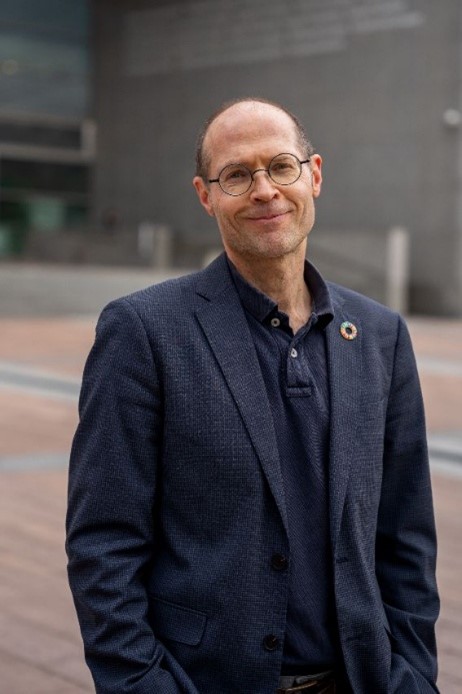
Olivier De Schutter was appointed the UN Special Rapporteur on extreme poverty and human rights by the Human Rights Council in March 2020. An academic specialised in economic and social rights, he was the UN Special Rapporteur on the right to food from 2008 to 2014, and a member of the Committee on Economic, Social and Cultural Rights between 2015 and 2020. Prior to those appointments, he was Secretary-General of the International Federation for Human Rights (FIDH). He teaches at UCLouvain (Belgium) and at Sciences Po (France).
Dr. Debapriya Bhattacharya, Economist and Public Policy Analyst and member of the United Nations Committee for Development Policy (CDP)
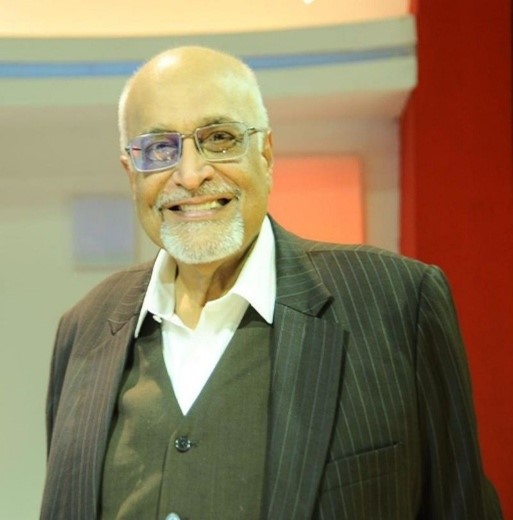
Debapriya Bhattacharya, a macro-economist and public policy analyst, is currently a Distinguished Fellow at the Centre for Policy Dialogue (CPD) in Dhaka, where he was the first Executive Director. He has been appointed by the Interim Government of Bangladesh as the Chair of the committee for the preparation of the “White Paper on the State of Bangladesh's Economy”. He is a ranking member of, among others, the United Nations Committee for Development Policy (CDP) and the Supervisory Board of BRAC International.
He is a former Ambassador and Permanent Representative of Bangladesh to the World Trade Organization (WTO) and UN Offices of Geneva and Vienna. He had been the Special Advisor on LDCs to the Secretary General of UNCTAD, President of the UNCTAD Governing Board, and the Coordinator of the LDC Group of countries in the UN System in Geneva. He is the founding Chair of two global initiatives, viz. LDC Monitor and Southern Voice. He is the Convenor of Citizen’s Platform for SDGs, Bangladesh.
He holds a Master’s and PhD in Economics from Plekhanov Institute of National Economics, Moscow. He was a post-doctorate fellow at the University of Oxford and a Senior Fulbright Fellow at the Center for Global Development (CGD), Washington DC.
His books include Southern Perspectives on the Post-2015 International Development Agenda (2016); Bangladesh’s Graduation from the Least Developed Countries Group – Pitfalls and Promises (2018); COVID-19 and Bangladesh: Inclusion, Disaggregation and Transition (2024); Effective Development Cooperation: New Evidence from the Global South (forthcoming), all published by Routledge.
Ms. Ana Isabel Arenas, Feminist Economist and Activist, member and co-founder of the Feminist Economy Table of Bogotá and the Intersectoral Table of Care Economy

Ana Isabel Arenas is a feminist activist and an economist from the Universidad del Valle, Colombia. She has a Masters in Economics from the Université Catholique de Louvain, Belgium. She has experience in development planning, with an emphasis on project management related to the structure and coordination of work teams, for the design, negotiation, fundraising, evaluation and execution of socio-economic initiatives, for populations in areas of poverty, displaced people, and community projects. She has experience in human rights work, especially with regard to gender equality, feminism, women's economic autonomy, children and ethnic/racial groups. Ana Isabel is an external consultant and participates in academic events at the national and international levels.
Ana Isabel is a member of the Mesa de Economía Feminista (MEF) Bogotá, the Mesa Intersectorial de Economía del Cuidado (MIEC) Bogotá, and the International Association for Feminist Economics (IAFFE).
Since 2005, Ana Isabel has developed activities related to Feminist Economics, in terms of deepening knowledge on the subject, dissemination of feminist economics among various audiences, and political advocacy in public decision-making bodies at the national and territorial levels. In 2011, she created the Mesa de Economía Feminista Bogotá, made up of feminist women who work in the areas of knowledge dissemination and political advocacy. In 2014, they participated in the creation of the Mesa Intersectorial de Economía del Cuidado (Intersectoral Roundtable on Care Economy) Bogotá. Starting in 2019, they supported the creation of Feminist / Care Economy Roundtables in 10 other territories in Colombia. There are currently 12 roundtables in 11 territories in the country, which function as an Alliance of Activist Roundtables on Feminist Economy. The focus is on a variety of topics, such as the foundations of feminist economics, macroeconomics and feminism, the care economy, community care, feminist fiscal policy, rural women and economic rights, feminist data and anti-racism.
Ms. Myrah Nerine Butt, Oxfam in Asia, Gender Justice Policy and Advocacy Manager
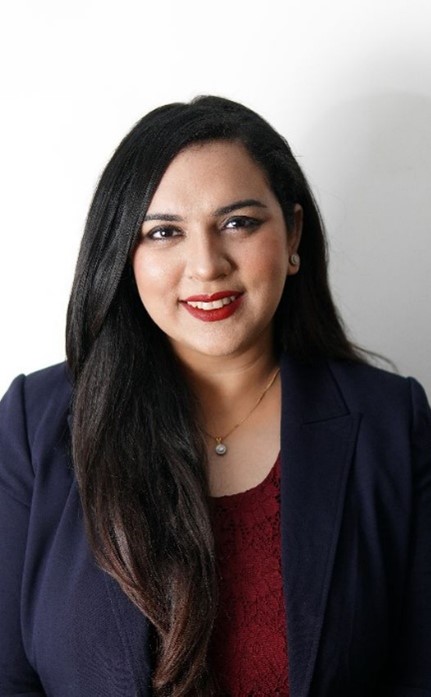
Myrah Nerine Butt is the lead on gender advocacy at Oxfam in Asia. Her work focuses on feminist economic and climate transformation. She advocates for community resilience, unpaid care and domestic work, feminist climate finance, feminist digital spaces, and enhancing citizens' voice and accountability. She engages ASEAN, the national governments of Laos, Cambodia, and the Philippines, and international financial institutions on gender justice.
Myrah has worked extensively across various regions of Pakistan, her home country. She holds a Master's degree in Poverty and Development from the Institute of Development Studies, University of Sussex, and an undergraduate degree in Economics from the Lahore University of Management Sciences. She is a Global Public Voices fellow at the Mario Einaudi Center for International Studies at Cornell University and a published author in the Gender and Development journal.
Ms. Anu Peltola, Director of Statistics, UNCTAD
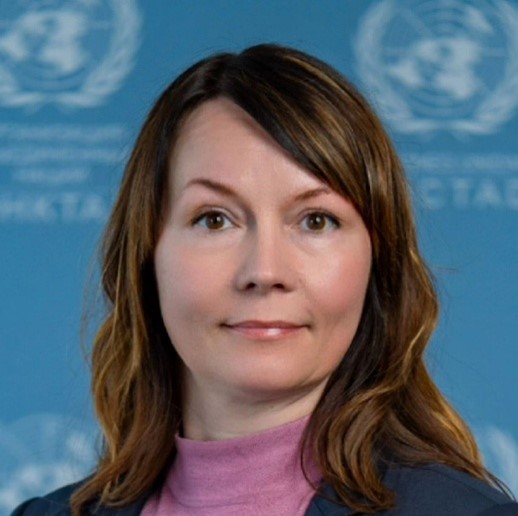
Anu Peltola, oversees the statistical work of the UN Trade and Development (UNCTAD), releasing official statistics and analytical datasets on trade and development for almost all countries globally at the UNCTADstat Data Centre. UNCTAD Statistics develops new indicators on productive capacities and inclusive growth to measure progress, releases guidance and tools e.g., on measuring gender equality in trade and publishes Data Insights in its SDG Pulse and UNCTAD Handbook of Statistics. UNCTAD is the custodian agency of nine SDG indicators on international trade, investment, illicit finance, south-south cooperation, and enterprise sustainability, and supports countries in measuring them. Ms. Peltola co-leads with UNDESA and UNDP a UN Secretary-General’s initiative on ‘Valuing What Counts to progress beyond Gross Domestic Product (GDP)’ and she coordinated a UN effort to cost the achievement of sustainable development. Prior to joining UNCTAD, she worked at the UNECE Statistical Division and started her career at Statistics Finland.