 Welcome to the United Nations

 OHCHR



Human rights don’t protect themselves.
Your donation protects the essentials we all rely on.
16 March 2026

“Sometimes when it's physical you can treat it, but torture in your soul you can never heal it,” said Shireen Khudeeda, a Yazidi survivor of ISIS captivity and human rights defender.
Khudeeda was abducted by ISIS in 2014 during the genocide in Sinjar, Iraq. Held captive for three years and subjected to torture and sexual slavery, she now advocates for justice, identification of mass graves, and support for survivors through Yazda, a global community-led institution.
Stories like Khudeeda's, repeated across regions and decades, helped shape the Charter of Rights of Victims and Survivors of Torture. Known as the Survivors' Charter, it emerged from three years of regional hearings in Bogotá, Nairobi and Kathmandu, and more than 120 submissions from survivors worldwide. Many of these survivors and the NGO's that back them have been supported by the UN Voluntary Fund for Victims of Torture.
Presented by the UN Special Rapporteur on Torture Alice Edwards at the 61st Session of the Human Rights Council in March 2026, it sets out standards on truth, accountability, rehabilitation and survivor participation, and calls on states to adopt it as a framework for action.
“Torture does not end when the abuse stops,” Edwards said. “Its effects continue in the body, the mind, family life, social standing and economic survival.”
In conversations with survivors around the world, she said a common pattern emerged.
“Many described a second struggle: to be believed, to access care, to navigate complex institutions, and to obtain legal recognition,” she added.
Edwards said that many survivors told her that silence, disbelief, and bureaucratic indifference prolonged their suffering.
“They survived torture but then had to fight to be recognised as survivors at all,” she said.
For many survivors, that struggle lasts for decades.
Italia Méndez is a Mexican survivor of sexual torture during the 2006 police crackdown in San Salvador Atenco, a small town about 30 km outside Mexico City. She was one of several women detained during the operation who reported sexual torture by security forces. Their case later reached the Inter-American Court of Human Rights, which ruled in favour of the women survivors in 2018.

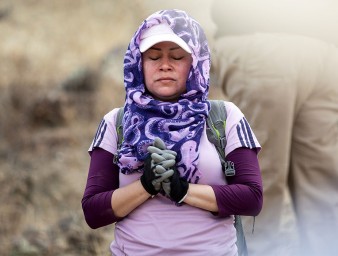
Italia Méndez, a Mexican torture survivor and human rights defender. © OHCHR
Nearly twenty years later, Méndez and other survivors continue to fight together for justice and accountability, becoming prominent human rights defenders against sexual torture and impunity in Mexico.
“It is impossible to explain this struggle in the singular, because my process and that of my companions has been collective,” Méndez said.
“We have a binding judgment and yet we still have not been able to access even the most basic thing, which is dignified and specialised medical care,” Méndez said.
“When we were in prison, the only thing the prison clinic offered me was paracetamol,” she said. “Now, when I go to the health centre to receive specialised treatment for the consequences of the torture, the only thing they offer me is paracetamol.”
Méndez said the women continue speaking out so the violence they endured does not repeat itself.
“I believe all the advocacy and struggle we can carry out to try to reverse these practices is essential,” she said.
Edwards said prevention is not only about prohibiting torture; it is also about how societies respond afterwards.
“Recognition, rehabilitation and participation are not secondary issues — they are central to recovery,” she added.
For survivors, the end of captivity rarely means the end of the fight.
For Khudeeda, justice begins with recognising the suffering of a community still waiting for answers.
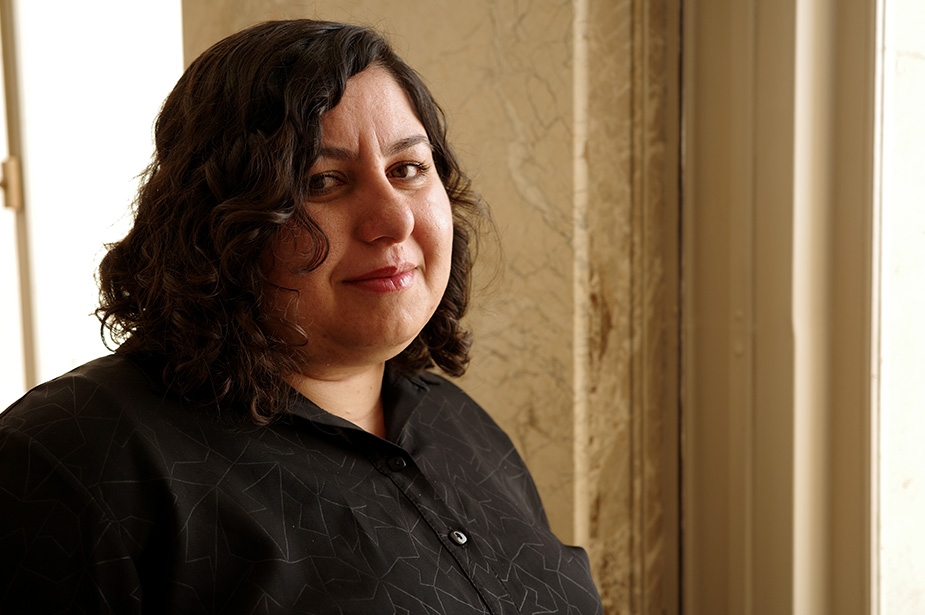
Shireen Khudeeda, a Yazidi torture survivor and human rights defender. © OHCHR
“People need justice to be healed from the genocide,” she said.
Even when answers finally arrive, they can reopen the trauma. After escaping captivity, Khudeeda had been almost certain her father — who had also been abducted — was dead. But when the forensic department called to say they had identified his remains, the confirmation brought a new wave of grief. Seeing only a few bones of his body, she said, was deeply painful.
More than a decade after ISIS attacked Sinjar, many Yazidi families are still searching for missing relatives and waiting for mass graves to be identified.
Méndez said impunity has also shaped the long struggle for justice in Mexico.
“The pact of impunity that exists in Mexico today is an open invitation for these abuses to continue,” she said.
Méndez and the other Atenco survivors have spent nearly two decades pushing for accountability. "We are still litigating for our right to access justice," she said.
Donatien Ndabigeze is a Burundian survivor of political violence linked to the 2015 crisis in Burundi. After surviving an attack that killed members of his family, he turned to international mechanisms to pursue justice, including the UN Committee Against Torture (CAT), which recognised Burundi's responsibility for violations in his case.

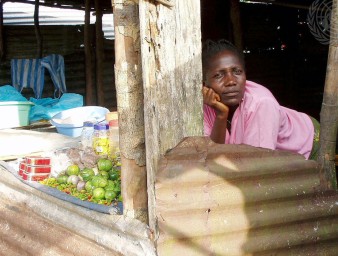
Donatien Ndabigeze, a Burundian torture survivor and human rights defender. © OHCHR
“My case is not only personal; it reflects the situation of many Burundians who are victims of torture and other serious violations,” Ndabigeze said. “If justice does not exist in Burundi, it means I have to seek it elsewhere.”
The recognition from CAT was an important moment for him. Ndabigeze said the decision confirmed that what he experienced was atrocious and that it was neither normal nor acceptable. For him, international justice is not a favour, it is a right.
Edwards said survivors repeatedly told her that justice systems often become another barrier rather than a path to recovery.
“Survivors have not asked for performative sympathy — they have asked for legal recognition, for rehabilitation that actually reaches them, and for justice that does not become another form of harm,” she said.
“Accountability rarely happens through a single dramatic moment. It is usually cumulative — built through documentation, persistence and multiple avenues,” Edwards added.
The Survivors' Charter aims to ensure survivors themselves help shape those justice processes.
“Survivors are not merely witnesses to atrocity. They are rights-holders, advocates and architects of positive change in their societies,” Edwards said.
“Too often, survivor participation is treated as symbolic — a testimony at an event or a story used to illustrate a report," she said. "Survivors told us very clearly that this is not enough.”
For Méndez, the Charter represents something her group has been working towards for nearly two decades.
“This charter is extremely important because the voice of survivors is heard, their experiences and their expertise,” she said. “We hope that our suffering will have meaning beyond our own bodies and families, so that others do not have to go through what we did.”
Ndabigeze sees survivor participation as essential to dismantling the silence around torture.
“It helps to break the silence and reminds people that behind statistics are broken human lives,” he said.
Khudeeda, too, believes speaking out is essential.
“Because we lost everything, there is nothing else to lose. It was the moment to raise our voices and demand our rights,” Khudeeda said.
“The Charter was made based on survivors' voices and experiences,” she added. “I hope that in five years it will be implemented fully.”

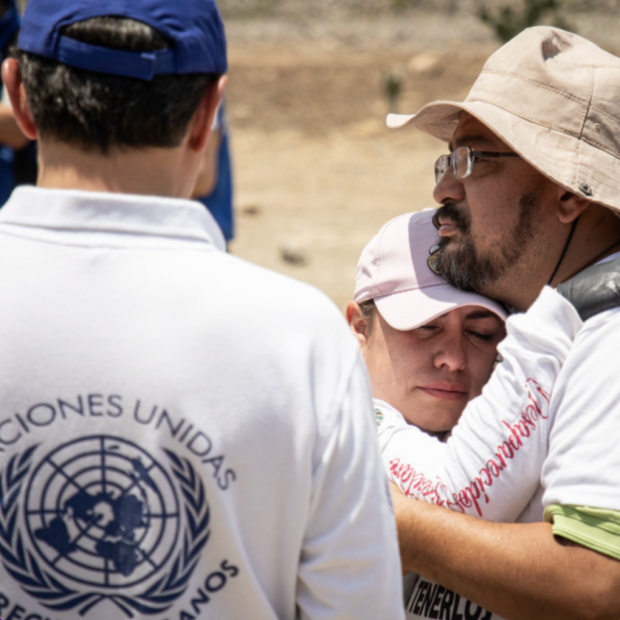
Alice Edwards, UN Special Rapporteur on Torture. © OHCHR
Edwards said recognising the unique experience of survivors is not only a matter of dignity but also helps strengthen policy, improve prevention and build institutions that people can trust.
“The Charter addresses truth, accountability and justice, participation in decision-making, rehabilitation, measures to prevent recurrence and protection from re-traumatisation,” Edwards said.
She believes the Charter, if implemented, could strengthen anti-torture efforts by centring survivors' experiences — ensuring that justice, reparations, and prevention strategies reflect what those who lived through it need and believe works.
“If the Charter were implemented, survivors would no longer feel invisible,” Edwards said. “They would have timely access to rehabilitation, meaningful recognition, and a real voice in shaping the systems meant to protect others.”
Justice after torture restores dignity — and only when trust is rebuilt can societies prosper and thrive.
Alice Edwards, UN Special Rapporteur on Torture
Your donation protects the essentials we all rely on.