 Welcome to the United Nations

 OHCHR





Human rights don’t protect themselves.
Your donation protects the essentials we all rely on.
28 August 2026
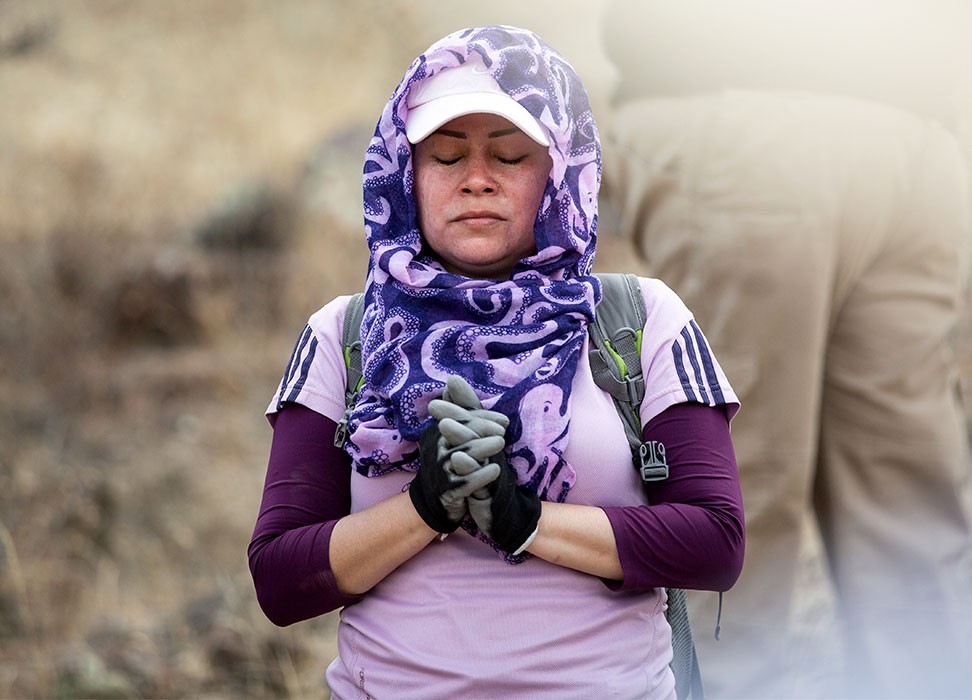
“Had it not been for the Urgent Action issued by the Committee [on Enforced Disappearances], nothing would have happened in the investigation,” a relative from Mexico said. “It was only from that moment on they began to show concern for the search for my son.”
He has not been found. What changed is that the search became relevant.
An Urgent Action is a request, not an order. Under Article 30 of the International Convention for the Protection of All Persons from Enforced Disappearance, anyone with a legitimate interest — who in practice is almost always a relative — can ask the Committee on Enforced Disappearances (CED) to intervene when a person has been disappeared. The Committee then asks the State party to take immediate measures to find that person and investigate what happened. And keeps asking until the person is located. It writes to the authorities. It writes back to the family or to those who submitted the urgent action request to keep them informed.
This procedure exists because families pressed for it. Adopted by the General Assembly on 20 December 2006, the Convention was drafted for victims and with victims, after years of campaigning by relatives, survivors of enforced disappearances, and the organisations they founded. They took part in the elaboration of the text from the outset — and they are in it: Article 24 defines a victim as the disappeared person and anyone who has suffered harm as a direct result.
Furthermore, article 24 gives victims the right to participate in the search and investigation procedures, and to know the truth about what happened, how the investigation is going, and what became of the person they are looking for.
So, when a family in any country writes to Geneva and a prosecutor or other State agent finally takes action on their case, the instrument that moved them was built by other families of disappeared persons.
And sometimes, it moves quickly. In August 2025, more than 15 armed men reportedly took a former soldier from his home in Togo to an unknown location. His family submitted a request. Four days after the Committee registered an Urgent Action, they wrote back: he had been located in State custody. Days later, a second case from the same country — a media content creator moved from prison without notice, his family asking where he was and getting no answer. Within days of registration of an Urgent Action, the authorities told his relatives where he was being held, and they were able to visit him.
Neither man was released by the Committee. But following the Committee’s intervention both were pulled back into visibility, which is the first thing a disappearance takes away.
In Mali, a journalist was taken from a store in May 2025 by five men who identified themselves as State security agents and driven away. The Committee registered an Urgent Action on 15 September; independent UN experts issued a public statement on his case. He was found alive and in good health days later. Their public stand, he wrote afterwards, “was a breath of humanity at a moment when everything seemed intent on tearing me away from life and from the law.”
By December 2025 the Committee had registered 2368 Urgent Actions, most of them concerning Mexico and Iraq. Since 2012, 569 disappeared people have been located after the registration of an Urgent Action, 435 of them alive. For most families, their relative has not been found. The file stays open, so they keep writing to the Committee, which keeps working on each open case until the fate and whereabouts of the disappeared person are established.
Victims write to the Committee from all over the world. “You are the only ones who give us back a little hope,” a family in Burkina Faso wrote.
“If this Urgent Action had not been granted,” wrote a person from Mexico, “the authorities would still not have identified my brother.”
“Thanks to your support and dedication, the authorities became more actively engaged and began asking questions and investigating the case more thoroughly,” wrote a family searching across Spain and Morocco for their brother.
“This ongoing uncertainty is a heavy burden for our family,” a relative in Serbia wrote. “Your presence and efforts continue to be a source of hope and strength for us.”
Juan Pablo Albán, Chair of CED, said enforced disappearance leaves families living between hope and grief, searching and waiting, sometimes for years or even decades, without knowing what happened to someone they love.
No one should have to endure that suffering.
Juan Pablo Albán, Chair of the Committee on Enforced Disappearances
The messages received by CED describe a pattern. What they show, again and again, is a search that did not happen until someone external asked. And they describe something else: relatives feel abandoned and are too often expected to take the lead, to gather the evidence, to carry the administrative, financial and emotional cost — for a crime rooted in State denial and concealment.
It is a pattern the Committee is not alone in seeing. The Working Group on Enforced or Involuntary Disappearances, established to put an end to the anguish of relatives of disappeared persons, has been receiving cases for 46 years, since before there was a committee which they could turn to.
“While ensuring families’ participation — in a safe and dignified manner — in the search for their loved ones is a State’s obligation, leaving the burden entirely on the victims’ shoulders is a form of perverse re-victimisation,” said Gabriella Citroni, Chair-Rapporteur of the Working Group.
She has seen it on every continent. Households are pushed into poverty because every resource goes to establishing what happened to one person. Relatives have spent their lives searching and carrying the psychological and physical cost of it. And campaigns of stigmatisation against them — families “referred to in denigratory terms, to the point of denying that their loved ones ever existed and labelling them as ‘insane’ or ‘crazy’ people.”
Victims should never be put in the position of replacing the State’s duty to search, investigate, prosecute and repair. That is what the Committee, the Working Group and other mechanisms said jointly this 30 August. It is also what the CED20 campaign asks of States in four words: victims first, action now.
The CED20 campaign marks twenty years of the International Convention for the Protection of All Persons from Enforced Disappearance. © OHCHR
Neither mechanism works alone. The Working Group and the Committee are two parts of the same architecture, built over decades by the same movement of families: one born in 1980, when there was no treaty to invoke, the other created by the Convention itself, twenty years ago. They share the same purpose — that no disappearance goes unanswered — and they reach different States, at different moments, with different tools. Between them, they leave fewer places in the world where a family has nowhere to turn.
The Convention is the only universal treaty dedicated to preventing and eradicating enforced disappearance. Seventy-eight States have ratified it. The rest have not.
That doesn’t leave those families with nowhere to write: the Working Group has taken cases from any country in the world and put them to governments as a humanitarian question: where is this person and what are you doing to find them?
As the first UN human rights mechanism created to address enforced disappearances, the Working Group has cases in its docket dating back to the dictatorships in Argentina, Chile or Peru. Decades later, it continues to remind States of their responsibilities. It has clarified almost 22 per cent of the cases it has received. Around 50,000, concerning 100 Member States, remain outstanding.
Ratifying the Convention does not make the Working Group redundant. Many of those outstanding cases concern States that have ratified the Convention, and the Working Group keeps pressing them for answers while offering technical cooperation to strengthen national law and dismantle the obstacles that stall searches, Citroni said.
For families in States that have not ratified, and in regions without their own systems of protection, the Working Group is the only mechanism there is. “Especially in areas of the world that do not even count on regional or sub-regional systems of protection, the Working Group currently is the only door thousands of persons caught between hope and despair can knock at,” Citroni said.
What ratification adds is obligation. A State party to the Convention that ignores an Urgent Action is failing an obligation it signed up to, in front of a body built to notice.
“Behind every enforced disappearance is a disappeared person and his or her family,” Albán said. “Ratifying the Convention affirms their right to be searched for and located, and to access to truth, justice and reparation.”
For States that have not yet ratified the Convention, the path is not a mystery: UN Human Rights has published a practical guide on how to become a party, and CED20 sets out what everyone else can do this year to advance ratifications.
Twenty years of drafting, ratifying, and arguing, and the question is still the same. It is the one the families were already asking before there was a treaty, the one Article 30 now obliges States to answer, and the one most of them are still asking: where are they?
The family in Mexico is still waiting, but their file is open — and on the CED20 Commemorative Wall, victims of enforced disappearance and everyone standing with them are sending messages to the world in words, drawings and videos. Join the fight to prevent and stop enforced disappearances and add yours.
Your donation protects the essentials we all rely on.