 Welcome to the United Nations

 OHCHR


Human rights don’t protect themselves.
Your donation protects the essentials we all rely on.
21 April 2026
Sri Lanka’s universal education, healthcare, and food subsidies once made it a global development model. But austerity measures led to budget cuts and financialization that redirected resources away from people toward infrastructure.
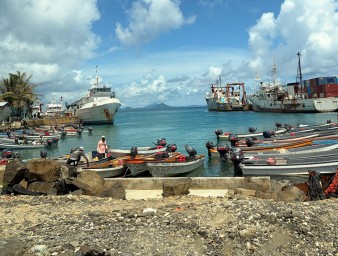
Until recently it was a country that was self-sufficient and exporting seafood worldwide. However, according to FAO’s 2025 Hunger Map and WFP’s 2024 Household Food Security Overview, today around one million people are chronically undernourished, and as many as nine million more are struggling to access enough nutritious food, with nearly four in ten households reporting inadequate diets in Sri Lanka.
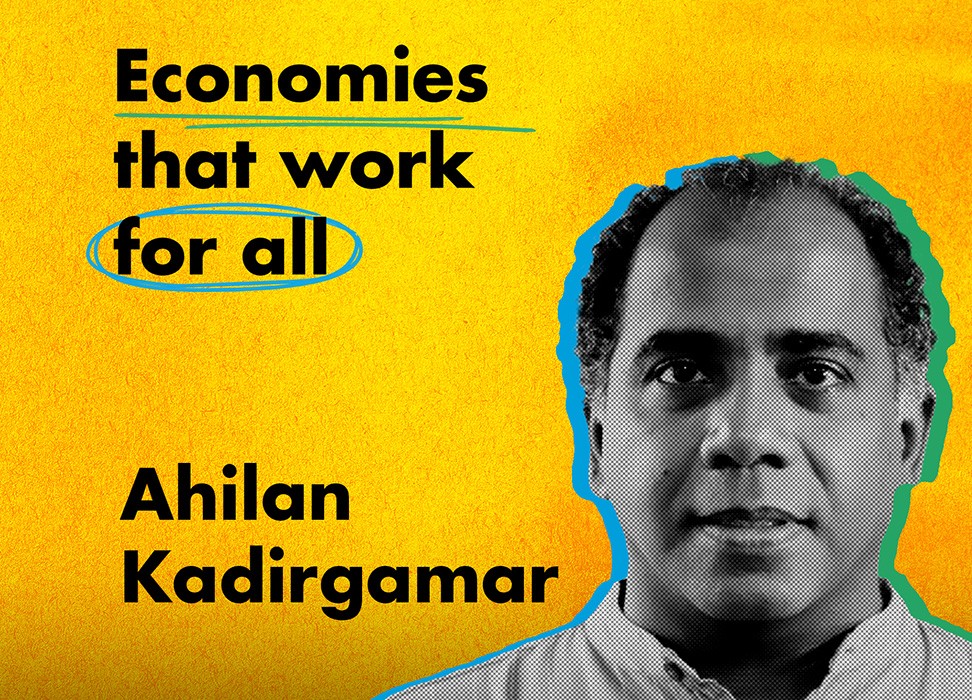
According to Dr. Ahilan Kadirgamar, a leading Sri Lankan economist and Senior Lecturer at the University of Jaffna, public services have been under severe strain. Hospitals continue to face shortages of essential medicines, universities are operating under austerity with declining real resources, and welfare programs are increasingly narrow and targeted, leaving many unprotected during crises.
Kadirgamar called for a Human Rights Economy built on universal entitlements, democratic decision‑making, and policies that prioritize livelihoods over exports.
“Economic policies cannot be the realm of experts,” he said. “It must be democratized. Its people's demands that should determine economic policies. So there needs to be a shift in our thinking ... The other point is that change will not come without action and there needs to be coalitions organizing at every level.”
He highlighted cooperatives — small, democratic, community‑based institutions — as vehicles for connecting producers and consumers and building resilient local economies.
“To rebuild the economy, citizens and policymakers must rethink how economic policies are made and form coalitions demanding equality, participation, and universal rights,” he said. “That's the context in which I understand the idea of a human rights economy: a new framework, but a framework that has to completely shift from the trajectory that we have been on.”
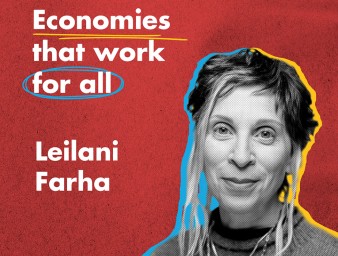
Produced by UN Human Rights and the UN System Staff College - Knowledge Centre for Sustainable Development, the Economies that Work for All podcast explores how economies and human rights can work hand in hand to unlock progress towards the 2030 Agenda.
Listen now
You can check out what the UN Human Rights Chief Volker Türk has to say about the Human Rights Economy and about the season two of Economies that Work for All.
Your donation protects the essentials we all rely on.