 Welcome to the United Nations

 OHCHR





Human rights don’t protect themselves.
Your donation protects the essentials we all rely on.
09 October 2026
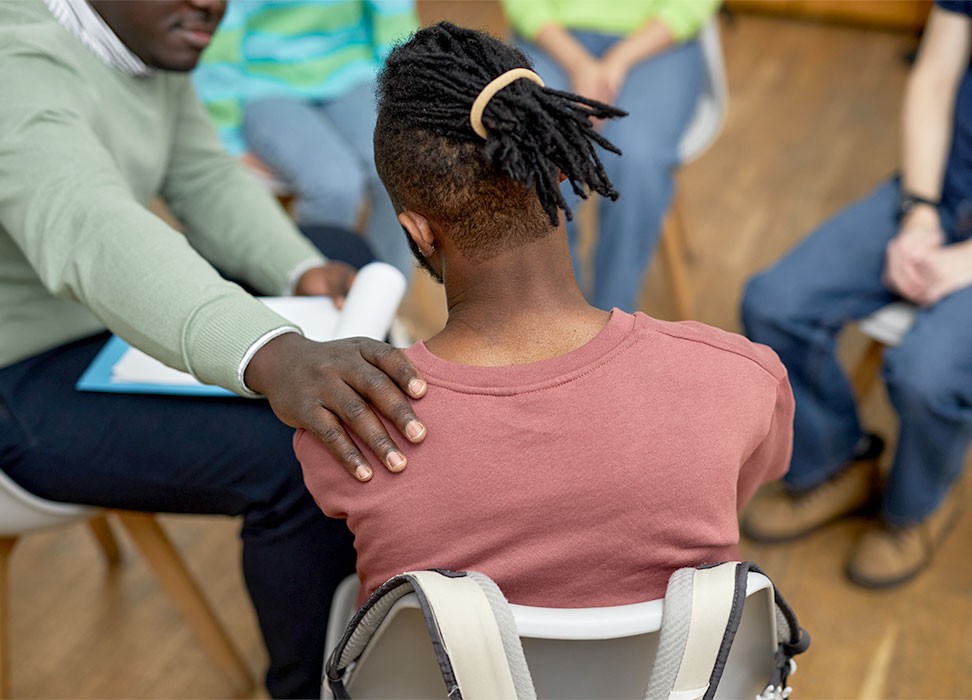
Anxiety, burnout, depression, loneliness, growing concerns about the future, substance abuse, self-harm and even suicidal ideation: these are some of the increasing mental health challenges thousands of young people consulted by UN Human Rights across all regions of the globe have reported as they go through a period of transition in their young lives.
A new, groundbreaking report by UN Human Rights was presented to the Human Rights Council on how mental health challenges affect young people's human rights. The report is based on 277 submissions from States, institutions, and civil society, including input from around 4,000 young people.
The young people consulted came from urban and rural settings and represented diverse educational and employment backgrounds. They included, among others, young people affected by poverty, conflict, humanitarian crises, youth on the move, Indigenous, LGBTIQ+ youth, young persons with disabilities; street‑connected youth and those detained in the justice system, among many other categories. Those consulted also had experience using the mental health services in their countries.
“Young people today are navigating significant social, economic, political, cultural and environmental changes. They face armed conflict, insecurity, economic pressures, the lingering effects of the COVID-19 pandemic, multiple planetary crises, a loss of social connection, and the rapidly evolving digital environment,” said Imma Guerras-Delgado, head of UN Human Rights’ Child Rights and Youth Unit. “These intersecting challenges are contributing to growing stress, uncertainty and exclusion, with significant implications for their mental health.”
Young people constitute some 32 per cent (2.6 billion) of the world’s population and are living through times of profound social, economic, political and environmental change. As stated in the report, these shifts are reshaping how young people learn, work and connect, while exposing many to heightened stress, uncertainty and social exclusion, with considerable implications for mental health.
As they cross over toward autonomy, independence, and new life stages, they must make decisions that could have implications for the rest of their lives. And mental health challenges, when unsupported, can derail that transition and undermine a wide range of human rights, not just the right to health, the report states.
“These challenges do not arise in isolation. They are shaped by broader structural and social determinants, including poverty, unemployment and under-employment, a lack of an adequate standard of living, including food and housing insecurity, discrimination, gender inequality, violence, unsafe and pressured educational environments, conflict, displacement and digital harms,” Guerras-Delgado said. “These systemic factors can affect the enjoyment of human rights, undermine well-being and create barriers to inclusion and support.”
The report also flags specific concerns: coercive treatment practices, guardianship arrangements that strip legal capacity, criminalization of suicide (still a crime in at least 23 countries), and privacy violations through data misuse.
According to the World Health Organization (WHO), suicide is the third leading cause of death among young people globally, underscoring the urgency of action as prevention has not been addressed adequately due to lack of awareness and the taboo around suicide in many societies.
The report highlights that mental health has long been neglected in public health systems. Services remain inconsistently available, accessible, acceptable and of high quality worldwide, hampered by poor data, underfunding and limited participation.
Stigma, taboos and fear of disclosure or institutionalization have compounded this neglect, leaving many young people without timely support. Unsupported mental health challenges in youth can disrupt education, employment, social connection, independence and access to services, with effects lasting a lifetime.
Risks compound for young women, LGBTIQ+ youth, young persons with disabilities, migrants and refugees, Indigenous and minority youth, those in detention or alternative care, and young human rights defenders—groups where intersecting discrimination heightens both mental health risk and barriers to support.
The report points out that timely, rights-based, youth-centred support builds resilience, agency and the foundation for lasting rights enjoyment. Further, youth-led advocacy has helped shift priorities and challenge the cultural, legal and policy barriers that sustain these gaps.
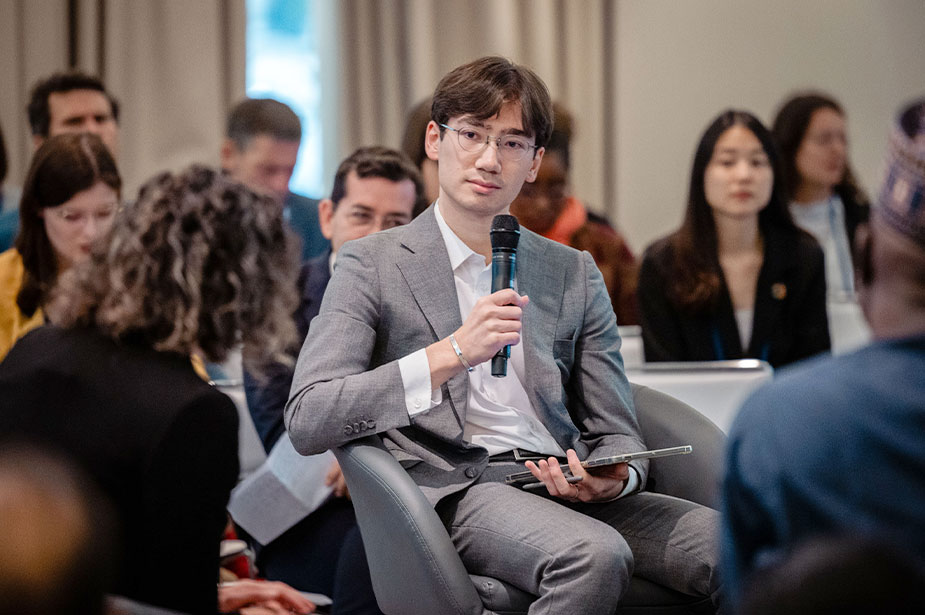
Ras spoke at an event to promote meaningful youth participation in decision-making related to youth mental health during the Human Rights Council in Geneva, 3 September 2026. © Dion Ras/Global Mental Health Action Network/World Health Summit
Dion Ras is among those advocating for youth mental health and for young people’s inclusion in developing solutions. From the Netherlands, he is a member of the Advisory Board of the Global Mental Health Action Network (GMHAN), the world's largest global mental health advocacy network. At GMHAN, he has advocated for greater investment into community mental health initiatives.
“There are many structural barriers including, very often, the lack of sustained funding. Typically, youth participation is temporary; it is attached to specific projects and when these projects end, youth participation is done,” Ras said. “Many Member States would benefit from sustained participation, with sustained funding, embedding youth participation into policies that go beyond the scope of specific projects.”
Ras, now 26, started doing peer psychological support work at the age of 15. This led him to volunteering for different organizations and representing them at various conferences, which brought him closer to advocacy work. Ras co-founded the national youth council of "@ease", a peer support organization based in the Netherlands, where he called for quality standards for peer support work and community-based support.
For Ras, peer support can become the only service young people can reply on because they do not have the financial means to talk to a professional carer or because of the stigma linked to seeking the assistance of mental health professional, or because they feel more comfortable to talk to someone closer to their age and with lived experience.
“The faster services are scaled, the harder it is to ensure quality,” he said. “Those who provide peer support can find themselves having to deal with highly specialized cases that, despite those barriers, need to be referred to more specialized care. But if there is no pathway for that, it becomes deeply unethical.”
According to Ras, one of the solutions would be the integration of peer support into primary healthcare services. He cited examples in Australia, Canada and Denmark, as well as in the Netherlands where @ease is trying to integrate their services into general practitioners’ offices.
“And making sure that the professionals peer support volunteers work with are sufficiently educated on the value of community-based mental health,” he added.
Ecaterina Bordei-Laiu is a dedicated youth advocate and civil society volunteer currently pursuing her legal studies at the Faculty of Law, University of Bucharest. Growing up in a smaller community, she often felt as though she was navigating the complexities of young adulthood entirely without a compass.
Seeking connection and a sense of belonging, her journey into civil society began in high school with People to People International, joining simply hoping to find a community of curious individuals. What started as a personal search for a safe space quickly transformed into a much larger mission.
“Volunteering saved me because it opened my vision to so many broad optics. I started being more open-minded afterwards,” she said.

“A human rights that depends on your postal code is not a right but a privilege of geography,” says Bordei-Laiu. © Ecaterina Bordei-Laiu
Through her volunteer work, Bordei-Laiu began listening closely to her peers, only to discover that her feelings of isolation were far from unique. Countless young people, especially those outside major urban centres, felt equally overwhelmed, unheard, and left out of decision-making processes.
Recognizing that this was a systemic issue affecting the young people’s development, she realized that access to supportive environments shouldn't depend on a young person's zip code.
“Young people who live in rural areas feel very disconnected from what is happening and the decisions that are taken at a national level regarding their mental health,” Bordei-Laiu said, explaining that young people had to pay to travel to cities where they could access trainings or consultations. This changed when local civil society actors were able to have a shared physical space.
“In this digital era, I feel that, even though we're supposed to be very connected to each other, we are as disconnected as ever from our human part,” she said. “And when a young person has the courage to open up and say they have less opportunities, or perhaps their situation is a bit different at home than it should normally be because they're going through abuse, this safe space, even though it's just a room, makes them feel safe and heard.”
Today, Bordei-Laiu’s mission is to bridge the gap between local activism and policymaking. She urged Governments “to stop treating peer-to-peer support as a substitute for institutional accountability.”
“Youth NGOs are doing the heavy lifting, but they cannot replace formal care. We need youth-friendly, accessible psychological infrastructure that meets young people where they are, acknowledging the social and digital determinants of their distress,” she said.
For Bordei-Laiu, youth advocacy was never just about giving young people a seat at the table but rather equipping them with the map and compass they need so they never have to navigate the world alone. Her overall philosophy: fix grassroots and local levels first, then build upward, rather than relying on a centralized urban approach alone.
In its report, recognizing the urgency to address youth mental health, UN Human Rights lists a series of recommendations to States and other stakeholders, starting with adopting a youth-centred, human rights-based approach to mental health, developed and implemented in partnership with young people themselves.
These recommendations include repealing laws that criminalize suicide, eliminating coercive practices in favour of supported decision-making, building integrated whole-of-government approaches, ensuring continuity of care across life stages, embedding youth participation structurally (not just consultatively), and publishing transparent, disaggregated data to enable accountability.
Young people surveyed also issued a call to action by highlighting States’ legal and moral obligation to act, echoing the Human Rights 75 Youth Declaration, which called for all stakeholders to respect and ensure mental integrity.
Your donation protects the essentials we all rely on.