 Welcome to the United Nations

 OHCHR




Human rights don’t protect themselves.
Your donation protects the essentials we all rely on.
24 July 2026
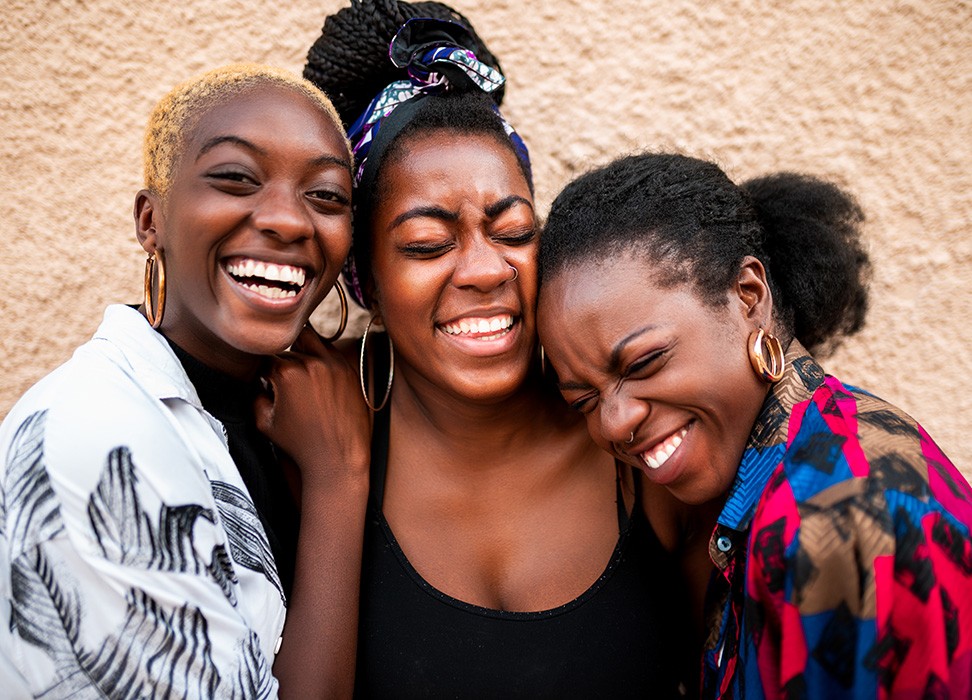
On 25 July 1992 in Santo Domingo, Dominican Republic, around 300 women of African descent from 32 countries across Latin America and the Caribbean arrived at the First Meeting of Latin American and Caribbean Black Women. They came from different countries and backgrounds, but they shared one certainty: they didn’t feel heard or represented.
The Americas are home to around 200 million people of African descent. Across the region, they continue to endure the legacies of enslavement and colonialism. The systemic racism they experience today is often compounded by sexism, limiting access to rights, opportunities and decision-making spaces.
What happened in 1992 left a deep mark on the history of the movement of women of African descent worldwide. The gathering led to the creation of the Network of Afro-Latin American, Afro-Caribbean and Diaspora Women (RMAAD) and its participants established 25 July as the International Day of Afro-Latin American, Afro-Caribbean and Diaspora Women - a date now observed globally as the International Day for Women and Girls of African Descent.

Glenda Joanna Whetherborn, member of the Network of Afro-Latin American, Afro-Caribbean and Diaspora Women, speaks with UN Human Rights staff members in Guatemala. © OHCHR/ Estela Morales
"[This Day] is vital to render visible and challenge the intersection between racism — bound up with pigmentocracy and colourism — and sexism, bringing silenced contributions to light and demanding public policies adapted to the realities of Black and Afro-descendant women in all our diversity,” said Glenda Joanna Wetherborn, a woman of African descent from Guatemala and member of the RMAAD.
For me, this is more than a day of recognition. It is a call to action, one that is needed, urgent, collective and long overdue.
Awa Dabo, UN Deputy High Commissioner for Human Rights
The Santo Domingo gathering did not emerge out of nowhere. It was the culmination of more than a decade of efforts by women of African descent who felt invisible in the very spaces where they should have been protagonists.
In 1985, some Brazilian women of African descent were denied entry to a feminist meeting in Bertioga, Brazil. This defining moment confirmed what many already felt, that they could not move forward without building a space of their own.
We believed in our strength as the voice of Afro-descendant women, and we set out to build a network. We had to forge our own path.
Ana Irma Rivera Lassén, a Puerto Rican lawyer, founder member of the RMAAD
In 1992 in Santo Domingo, women discussed racial discrimination, patriarchy, poverty, migration and violence. They marched against the quincentenary commemorations of the colonization of the Americas.

Sonia Viveros Padilla speaks with UN Human Rights staff members about the origins of RMAAD at Casa Ébano in Quito, Ecuador. © UN / Emily Mestanza
For Sonia Viveros Padilla, an Ecuadorian activist of African descent and member of the RMAAD, 25 July remains both a commemoration and a political call.
“It is the date on which we remember our struggles, but also reaffirm our commitment,” she said. “As a political date, it makes visible the work being done to affirm our identity and ensure respect for the individual and collective rights of people of African descent and, in particular, of women of African descent.”
The RMAAD soon became a powerful political space for reflection, exchange of ideas, and advocacy. Its members carried the demands of women of African descent to the World Conference on Human Rights in Vienna in 1993, to the Fourth World Conference on Women in Beijing in 1995, and to the World Conference against Racism, Racial Discrimination, Xenophobia and Related Intolerance in Durban in 2001, during which the Durban Declaration and Programme of Action (DDPA) was adopted. Today, the Network brings together more than 450 members in 30 countries.
One of the Network’s greatest strengths is its multigenerational character: the founders from 1992 stand alongside young women leaders of African descent.
"The younger generations have contributed to a renewal of discourses and methodologies, incorporating intersectionality, decoloniality, artivism —the intersection of art and activism—, and the use of technologies and information and communication tools, to connect the legacy of our ancestors with new digital narratives and instruments for international advocacy," Wetherborn explained.
The work of these younger generations, she noted, focuses on building alliances to dismantle racial stereotypes and consolidate support networks.
Viveros Padilla, who joined the RMAAD through the Ecuadorian women of African descent movement, describes the Network as a place where women of African descent across the region can recognise each other’s experiences and organise their movement across borders.
“We came to know and recognise each other as peers, women from different territories, different Afro-descendant peoples and different countries, but with similar problems,” she said, adding that the Network is “a space of belonging, not affiliation”: a platform through which members can share their national realities, build common responses and advance an international agenda rooted in the demands of their communities.

Serrana Lamas Silva of the Network of Afro-Latin American, Afro-Caribbean and Diaspora Women, stands beside a photograph of an ancestor at Centro Cultural Cuareim in Montevideo, Uruguay. © OHCHR / José Peralta
For younger members such as Serrana Lamas Silva, this intergenerational exchange has also opened new forms of participation.
"My generation has taken on a very important challenge: to carry forward the legacy of the women who opened the path, while at the same time building new forms of participation for Afro-descendant youth," she said.
"We have ensured that young people not only participate, but also shape the definition of political agendas," Lamas Silva added. "We have brought in issues such as anti-racist education, the political participation of youth, the right to mental health, human mobility, and the need to generate data with an ethnic-racial and intersectional approach."
What began as the collective decision of 300 women gradually gained ground in State agendas and multilateral forums, driven notably by the first International Decade for People of African Descent (2015–2024).
And in 2024, the UN General Assembly officially established 25 July as the International Day for Women and Girls of African Descent.
For the Network's members, the partnership with UN Human Rights is key to translating that recognition into real change.
"[This partnership] strengthens the demands for political recognition in the region by giving them normative backing and international protection," Wetherborn explained. "«This makes it possible to bring the rights of Afro-descendant women into decision-making forums, compelling States to make commitments and be held to account. »
Viveros Padilla described UN Human Rights as a strategic ally for the Network: one that monitors States’ international commitments, provides technical assistance and helps civil society engage with human rights mechanisms.
Awa Dabo, UN Deputy High Commissioner for Human Rights, stressed that meaningful progress for women and girls of African descent requires concerted action by States.
“States must deliver on their human rights obligations, that is to tackle systemic racism, dismantle barriers to participation, invest in quality education, health care, and economic opportunity, collect and use disaggregated data, and ensure women and girls of African descent have a meaningful voice in decisions that shape their lives,” Dabo said.
Looking ahead to the Second International Decade for People of African Descent (2025–2034), Wetherborn summed up the aspirations of the Network.
“We seek to achieve full recognition, justice and development for Afro-descendant women and girls,” she said. For Wetherborn, this means moving beyond commitments and translating them into action.
Bia Albernaz, Anti-Racial Discrimination Advisor based in the Office for South America, said that UN Human Rights’ work with the Network of Afro-Latin American, Afro-Caribbean and Diaspora Women is grounded in a shared commitment to ensure that the rights of women and girls of African descent are fully realised.
“The Office will continue working alongside its members to strengthen participation, support accountability and help turn commitments into concrete change in the lives of women and girls of African descent,” Albernaz added.
Every year, on 25 July, the Network remembers why it was established: to create a space for women of African descent to gather and honour their history and their demands. The International Day now carries their work forward as a wider global struggle, calling for recognition, equality, justice and lasting change.
Your donation protects the essentials we all rely on.