 Welcome to the United Nations

 OHCHR



Human rights don’t protect themselves.
Your donation protects the essentials we all rely on.
31 August 2026
Marie-Josée Loshi, Noëlle Verbeken, Léa Tavares Mujinga, Simone Ngalula and Monique Bintu Bingi were born in the Congo between 1948 and 1952. Between the ages of two and five, they were torn from their African mothers and placed in Catholic missions, stripped of family, identity and culture. They were five of an estimated 15,000 mixed-race children, the so-called "métis", born to European fathers and African mothers who were separated from their families under practices carried out during Belgian colonial administration.
For decades, the victims were left with the sense that the past was expected to just fade away. Then, in June 2020, the five women brought a civil lawsuit highlighting not only their individual experiences but also challenging a colonial policy that had affected thousands of métis children. They lost at first instance in 2021. They appealed, and in 2024, the Brussels Court of Appeal found that Belgium had incurred civil liability for acts constituting crimes against humanity.
On 22 May 2026, the Court of Cassation, Belgium's highest court of appeal, confirmed the State's responsibility and upheld the five women's right to reparation, awarding damages to each woman.
"Until then, these events had been understood simply as a historical episode, as a detail of the past, and were in fact largely unknown," recounted Jehosheba Bennett, a Belgian lawyer of African descent who was part of the legal team that represented the five women.
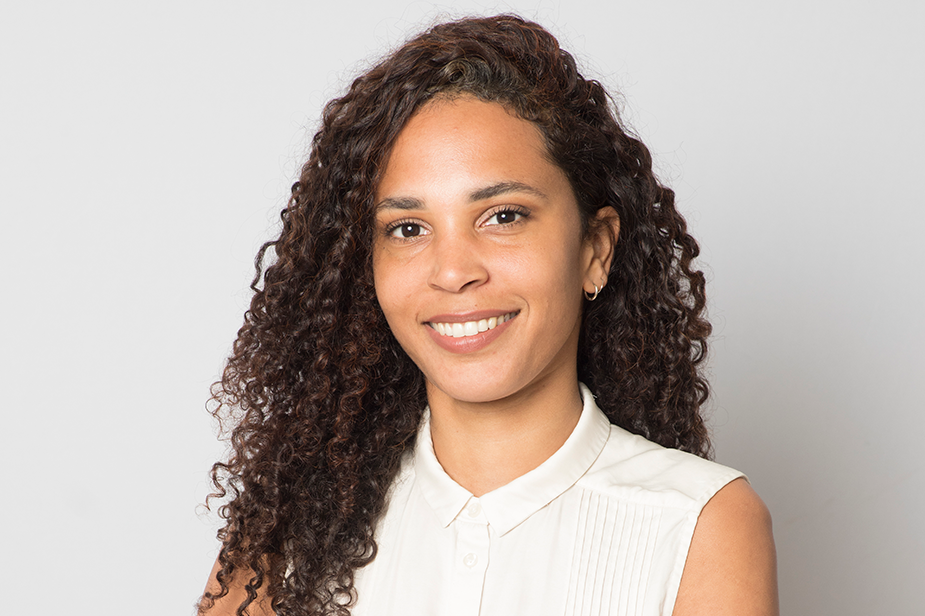
Jehosheba Bennett, an attorney who was part of the legal team representing the five “métis” women. © Jehosheba Bennett
Building the case was a delicate process, never before had the women been asked to relive what happened to them with anyone from outside their community.
"We gave a great deal of thought to how to collect their testimonies in conditions that would be as safe and reassuring as possible," Bennett said. The women’s testimonies were supported by documents in their possession, including records of their placement in institutions, correspondence between the Catholic nuns and the colonial governor, and notebooks recording arbitrary changes of name. This evidence, Bennett said, “made it possible to demonstrate that this was a systematic State policy.”
This case shows that strategic litigation can achieve more than justice for the direct victims, bringing a measure of recognition to the 15,000 survivors and setting a precedent that others can invoke.
For the victims, [this decision] provides a form of recognition of the immense suffering that shaped their lives. And legally, it allows them to continue their fight, because [of] the fact that crimes against humanity are imprescriptible.
Jehosheba Bennett, Belgium-based international criminal lawyer
For people of African descent, who too often face historical and structural barriers in accessing justice, strategic litigation can move a claim beyond political acknowledgement, securing concrete remedies that courts can enforce.
Every year on 31 August, the International Day for People of African Descent reminds us how much work remains to be done to address the enduring consequences of enslavement, colonialism and systemic racism. This year's commemoration carries particular weight. It coincides with 25 years after the adoption of the Durban Declaration and Programme of Action, the most comprehensive global framework for combating racism and racial discrimination, and at the beginning of the Second International Decade for People of African Descent (2025–2034), proclaimed by the General Assembly under the theme "Recognition, justice and development".
UN Human Rights’ four-point Agenda towards transformative change for racial justice and equality calls on States to end impunity for violations by law enforcement and to confront the continuing consequences of enslavement and colonialism through accountability and redress. In 2025, a report of the High Commissioner reinforced that call, stressing that reparatory justice must be comprehensive, shaped by affected communities and grounded in international human rights law.
The discrimination and inequality that the Durban Conference laid bare are not remnants of enslavement and colonialism consigned to the past but structures still operating in the present. They persist today in the systemic racism that continues to run through all areas of the lives of people of African descent, including through discriminatory law enforcement practices.
In the United States of America, civil rights lawyer Benjamin Crump has spent decades fighting for justice in relation to deaths of people of African descent at the hands of law enforcement. He represented the families of George Floyd and Breonna Taylor, among many others.
Bennett and Crump are not only representing people of African descent in the courtroom; as members of those communities themselves, they are leading the struggle to challenge racial injustice and secure accountability.
For Crump, the lesson came early. In 2006, he took on the case of Martin Lee Anderson, “a fourteen-year-old who was placed in a juvenile detention centre in Florida,” he recalled. “Martin was beaten to death by guards at the facility for ‘failing to comply’ with a mandatory run.” The case, Crump said, “resulted in a complete ban on juvenile boot camps in Florida". It was the first time he had seen that justice for one family could change an entire system.
The murder of George Floyd in 2020 sparked a global movement against racism — one that reached the Human Rights Council, prompting a debate on systemic racism and the creation of the Expert Mechanism to Advance Racial Justice and Equality in Law Enforcement (EMLER).
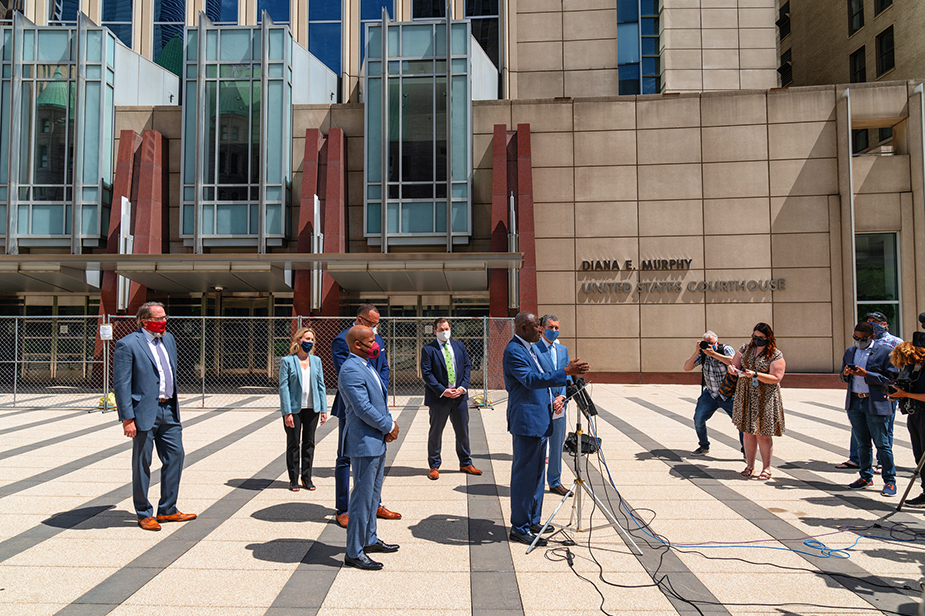
Attorney Benjamin Crump announces a federal civil rights lawsuit against the City of Minneapolis on behalf of the family of George Floyd, outside the Diana E. Murphy USA Federal Courthouse. ©Photo by Tony Webster / CC BY 2.0
"The ability to seek justice for my clients on the world stage gave me an opportunity to create more systemic change throughout America, because a global lens was placed on the ongoing racial disparities facing Black people in the United States," Crump said.
For Crump, litigation does not replace activism — it amplifies it. "Litigation writes into law and policy the voice of the people represented by grassroots activists," he explained. And the international system is closer at hand than many assume. Submitting a report of a human rights abuse to the United Nations, he said, "is much easier than most attorneys assume".
In every nation that a Black child is born and draws its first breath, it should be entitled to equal rights.
Benjamin Crump, USA civil rights attorney
Informed by the lived realities of people of African descent across the globe, the ambition of the Second International Decade is to achieve not only recognition but also justice and development. Addressing the General Assembly in March 2026, UN High Commissioner for Human Rights Volker Türk called for political will — "the will to confront the legacies of the past, including enslavement and colonialism, and to repair the damage done". He pleaded for "the will to strengthen accountability for all forms of racial discrimination and hatred, and to ensure justice for victims and their families".
What keeps people moving forward through struggles that can last for decades?
For Benjamin Crump, the lesson is to keep going, regardless of setbacks. He cited the words of Nelson Mandela: "Do not judge me by my successes, judge me by the number of times I have fallen down and stood back up again."
“Put your energy in your decision to wake up every morning and fight for what is right regardless of the outcome at the end of the day,” Crump added.
Your donation protects the essentials we all rely on.